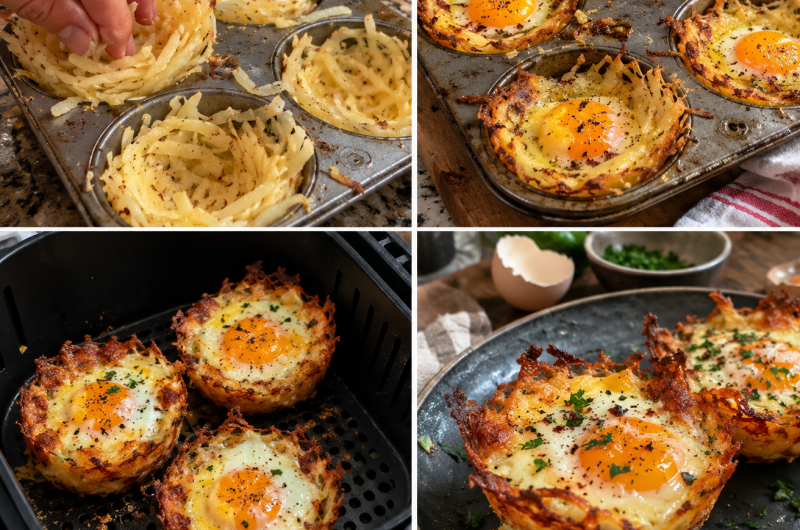
Air Fryer Crispy Potato Egg Cups are a satisfying breakfast made with shredded russet potatoes, eggs, cheddar cheese, Parmesan, herbs, and simple seasonings. The potatoes form a golden outer cup while the eggs provide a soft, protein-rich center. Cheese adds richness and helps bring the flavors together, creating individual breakfast portions that are easy to serve for busy mornings, weekend brunch, or meal preparation.
The combination of potatoes and eggs makes these crispy breakfast cups both hearty and familiar. Russet potatoes develop crisp edges when excess moisture is removed, while eggs provide a tender center that contrasts with the crunchy potato shell. Garlic powder, onion powder, paprika, salt, and black pepper add balanced savory flavor without making the recipe complicated. Fresh parsley finishes the cups with a mild herbal note.
Why You Make This Recipe
One of the best features of potato egg cups is the contrast between the crispy outside and tender center. Instead of mixing everything together into one breakfast casserole, the shredded potatoes create individual nests that hold the eggs and cheese. This gives every serving its own golden edges and creamy center, making the recipe visually appealing as well as enjoyable to eat.
These breakfast egg cups are also convenient because the recipe makes six individual portions. There is no need to cut a large casserole into equal pieces after cooking. Each potato cup already provides a clearly defined serving, which makes them useful for family breakfasts, brunch tables, and meal preparation. They can also be paired with other breakfast foods when serving a larger group.
Crispy Shredded Potato Cups
The potato base is one of the most important elements of this recipe. Three medium russet potatoes are peeled and shredded to form the cups. Russet potatoes work particularly well because their texture can become crisp when properly prepared and cooked. Shredding also creates many thin surfaces and edges that can brown during cooking.
Removing moisture from the shredded potatoes is essential. Freshly grated potatoes contain considerable water, and leaving that moisture behind can result in a softer potato shell. After grating, place the potatoes inside a clean kitchen towel and squeeze firmly. Removing as much liquid as possible helps the potato strands brown more effectively and gives the finished egg cups a noticeably crisper texture.
Why Russet Potatoes Work Well
Russet potatoes are a practical choice for crispy potato recipes because of their relatively starchy texture. When shredded, dried, seasoned, and cooked, they can form a firm golden shell around the egg filling. Their mild flavor also works naturally with eggs, cheddar cheese, Parmesan, and the savory seasonings used in this breakfast recipe.
The potatoes should be grated using the large holes of a box grater. Very finely shredded potatoes may become too compact, while larger shreds create more texture around the outside of each cup. After squeezing out the moisture, separate any tightly compressed potato strands before mixing them with the butter, oil, cheese, and seasonings.
Seasoning the Potato Mixture
The potato mixture receives flavor from several simple ingredients. Melted butter and olive oil coat the shredded potatoes and contribute richness, while garlic powder and onion powder create a savory foundation. Paprika adds another layer of flavor, and salt and black pepper provide basic seasoning. Grated Parmesan contributes both saltiness and a deeper cheese flavor.
Mixing thoroughly is important because every strand of potato should receive some seasoning and fat. Uneven mixing can leave some areas flavorful and golden while others remain plain or dry. Toss the shredded potatoes carefully until the melted butter, olive oil, Parmesan, and seasonings appear evenly distributed throughout the mixture.
Creating the Potato Cup Shape
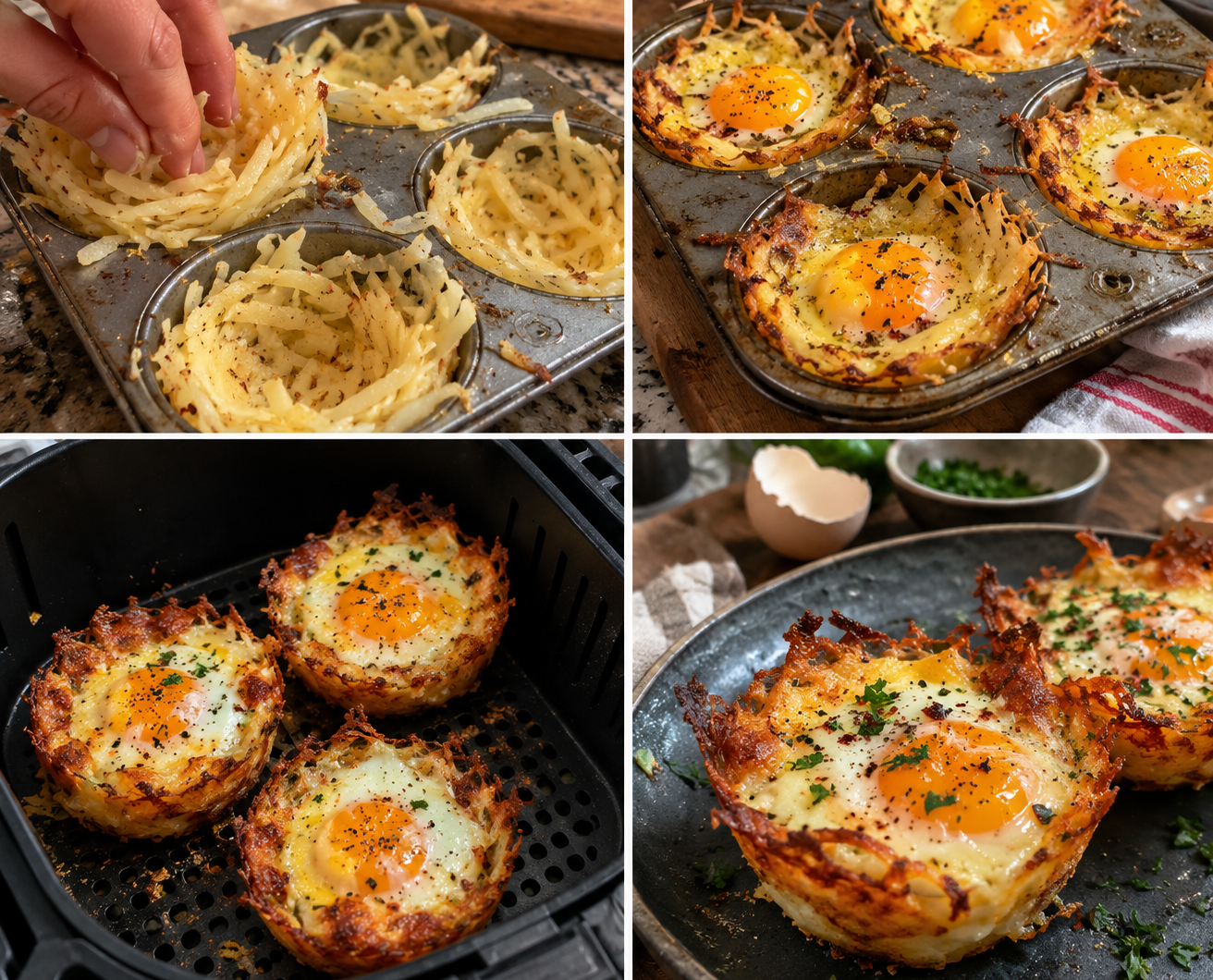
The potato mixture needs to form a cup rather than simply sitting as a flat layer. Distribute it between the prepared sections and press the potatoes against the bottom and sides to create a nest-like shape. The center needs enough space to hold an egg and any optional ingredients you decide to use.
Do not make the base excessively thin, because it needs enough structure to support the egg after cooking. At the same time, avoid creating very thick sections that cook unevenly. A reasonably even layer of shredded potatoes around the bottom and sides will produce the most consistent balance between a crisp exterior and tender interior.
Why the Potato Shell Should Cook First
Cooking the potato shell before adding the egg is an important technique. Eggs cook much faster than raw shredded potatoes, so adding everything at the same time could leave the potato undercooked by the time the egg reaches the desired texture. Giving the potatoes a head start allows them to develop a firmer, crispier surface.
This two-stage approach also improves the overall structure of the breakfast cups. Once the potato base begins to crisp and set, it can support the egg filling more effectively. The finished cup is then easier to serve without falling apart. This is particularly helpful when making individual portions that need to maintain their shape.
Eggs Create the Tender Center
Six large eggs are used in the recipe, providing approximately one egg for each potato cup. Eggs contrast beautifully with the crisp potato shell because their texture remains softer and more delicate. They also provide much of the protein in the finished breakfast, helping make each serving more substantial.
When adding the eggs, leave enough room inside each potato shell so the egg does not overflow during cooking. This is also why optional vegetables, bacon, or sausage should not be packed too heavily into the cups. The egg needs sufficient space to settle inside the potato nest and cook evenly.
Adding Cheddar and Parmesan Cheese
This recipe uses two different cheeses, each with a different role. One cup of shredded cheddar provides the familiar melted cheese texture and rich flavor commonly associated with breakfast egg recipes. Two tablespoons of grated Parmesan are mixed with the potatoes, adding savory flavor directly to the crispy outer shell.
Using both cheeses creates flavor throughout the cup instead of concentrating all the cheese in one area. The Parmesan seasons the potato mixture while cheddar contributes a creamier melted element. The result is a breakfast cup in which potatoes, eggs, and cheese work together rather than tasting like completely separate layers.
Optional Add-Ins for More Flavor
The original recipe includes several optional additions: cooked bacon, cooked breakfast sausage, diced bell peppers, chopped onions, chopped spinach, sliced mushrooms, and chopped green onions for garnish. These ingredients allow the basic potato and egg cups to be adapted without changing the main recipe.
If using optional ingredients, avoid adding too much to each cup. Overfilling leaves less space for the egg and can make even cooking more difficult. Cooked bacon or breakfast sausage can provide a more savory, meatier breakfast, while spinach, peppers, onions, and mushrooms provide vegetable-based variations. Green onions can be scattered over the finished cups as a garnish.
A Convenient Breakfast for Meal Prep
Individual egg cups are naturally suited to meal preparation because they are already divided into portions. Rather than preparing a large breakfast every morning, a batch can provide several convenient servings. This makes potato egg cups particularly useful for people who enjoy a substantial savory breakfast but have limited preparation time on busy mornings.
When reheating, using an air fryer can help restore some crispness to the potato exterior. A microwave is quicker but generally produces a softer texture. Whichever method you choose, reheat only until the center is properly warmed. Excessive reheating can make the eggs firmer and drier than when freshly cooked.
Breakfast, Brunch, or a Light Meal
Although Crispy Potato Egg Cups are naturally suited to breakfast, they do not have to be limited to mornings. Their combination of eggs, potatoes, and cheese makes them substantial enough for brunch or a light meal. They can be paired with a simple salad or vegetables when serving them later in the day.
Their individual size also makes them convenient for a brunch spread where several dishes are being served. Guests can take one cup without needing to cut or scoop from a larger casserole. The golden potato exterior and visible egg center also create an appealing homemade appearance that works particularly well on a casual brunch table.
Getting the Crispiest Potato Texture
The most important step for achieving crispy potatoes is removing moisture. After grating the russet potatoes, squeeze them thoroughly inside a clean kitchen towel. Continue until very little liquid comes out. This extra effort can make a significant difference because excess water produces steam, which works against the crisp texture you want.
The butter and olive oil also help the potato strands develop a golden exterior. Make sure they are distributed evenly before shaping the cups. Avoid making one part of the potato shell extremely thick while another part is thin. Evenly shaped cups generally cook more consistently and develop better texture around both the sides and bottom.
Avoiding Common Potato Egg Cup Problems
A soft or soggy potato shell is usually associated with excess moisture or insufficient initial cooking. Dry the shredded potatoes carefully and give the potato cups enough time to begin crisping before introducing the eggs. These two steps help create the texture contrast that defines the recipe.
Sticking can also make the cups difficult to remove. The original recipe calls for non-stick cooking spray, so coat the cooking surface thoroughly before adding the potato mixture. After cooking, allow the cups to cool slightly before attempting to remove them. A short resting period helps the structure settle and can reduce breakage.
Making the Egg Cups More Colorful
The optional vegetables provide an easy way to introduce additional color and texture. Bell peppers add bright color and mild sweetness, spinach contributes green color, mushrooms bring an earthy flavor, and onions add a savory note. These ingredients can be used individually or in small combinations according to preference.
Because vegetables often release water during cooking, avoid using excessive quantities. The potato shell is intended to remain crisp, so moisture management remains important even when customizing the recipe. Keeping vegetable pieces relatively small also helps them fit comfortably inside the individual cups without crowding out the egg.
Protein and Nutrition
According to the supplied nutrition information, each serving provides approximately 255 calories and 13 grams of protein. The recipe also lists 18 grams of carbohydrates, 15 grams of fat, 2 grams of fiber, and 1 gram of sugar per serving. Eggs and cheese contribute much of the protein and fat, while potatoes account for a significant portion of the carbohydrates.
The stated nutrition also includes approximately 195 milligrams of cholesterol, 360 milligrams of sodium, 520 milligrams of potassium, 170 milligrams of calcium, and 2 milligrams of iron per serving. These numbers should be treated as estimates because exact values can vary according to potato size, cheese brands, and the quantities of optional ingredients actually used.
Notes for the Best Crispy Potato Egg Cups
Remove as much moisture as possible from the grated russet potatoes. This is the most important step for achieving a crisp shell. After squeezing, loosen the potato shreds before mixing them with the butter, olive oil, Parmesan, and seasonings so the mixture can be coated evenly.
Coat the cooking surface thoroughly with non-stick cooking spray. Potato and melted cheese can stick easily, and proper greasing helps the finished cups release without breaking. Allow the cooked cups to rest briefly before removing them so their structure has time to firm.
Do not overfill the potato nests with optional ingredients. Bacon, sausage, vegetables, and cheese all add flavor, but enough room must remain for the egg. Smaller amounts of add-ins generally produce a more balanced cup and allow the egg to cook more evenly.
The original nutrition information is based on the basic recipe. Adding bacon, sausage, extra cheese, or other optional ingredients will change the calories, protein, fat, carbohydrates, sodium, and other nutritional values.
Air Fryer Potato Egg Cups Recipe
Crispy Potato Egg Cups combine seasoned shredded russet potatoes, eggs, cheddar, Parmesan, and fresh parsley in convenient individual portions. The
6
servings20
minutes35
minutes255
kcal55
minutesIngredients
3 medium russet potatoes, peeled
6 large eggs
1 cup shredded cheddar cheese
2 tablespoons grated Parmesan cheese
2 tablespoons melted butter
1 tablespoon olive oil
½ teaspoon garlic powder
½ teaspoon onion powder
½ teaspoon paprika
½ teaspoon salt
¼ teaspoon black pepper
2 tablespoons chopped fresh parsley
Non-stick cooking spray
- Optional Add-Ins
½ cup cooked bacon, crumbled
½ cup cooked breakfast sausage
¼ cup diced bell peppers
¼ cup chopped onions
¼ cup chopped spinach
¼ cup sliced mushrooms
Chopped green onions for garnish
Directions
- Peel the russet potatoes and grate them using the large holes of a box grater.
- Wrap the shredded potatoes in a clean kitchen towel and squeeze thoroughly to remove as much moisture as possible.
- Combine the potatoes with melted butter, olive oil, garlic powder, onion powder, paprika, salt, black pepper, and Parmesan.
- Coat the cooking cups generously with non-stick cooking spray.
- Divide the potato mixture between 6 cups. Press against the bottom and sides to create nests.
- Cook the potato cups first until they begin to turn golden and crisp.
- Add the eggs, cheddar cheese, and any desired optional add-ins without overfilling the cups.
- Continue cooking until the eggs reach the desired doneness and the potato edges are crisp.
- Sprinkle with fresh parsley and optional chopped green onions.
- Allow the cups to cool slightly before carefully removing and serving.
Nutrition Facts
6 servings per container
- Amount Per ServingCalories255
- % Daily Value *
- Total Fat
15g
20%
- Total Carbohydrate
18g
7%
- Protein 13g 26%
* The % Daily Value tells you how much a nutrient in a serving of food contributes to a daily diet. 2,000 calories a day is used for general nutrition advice.