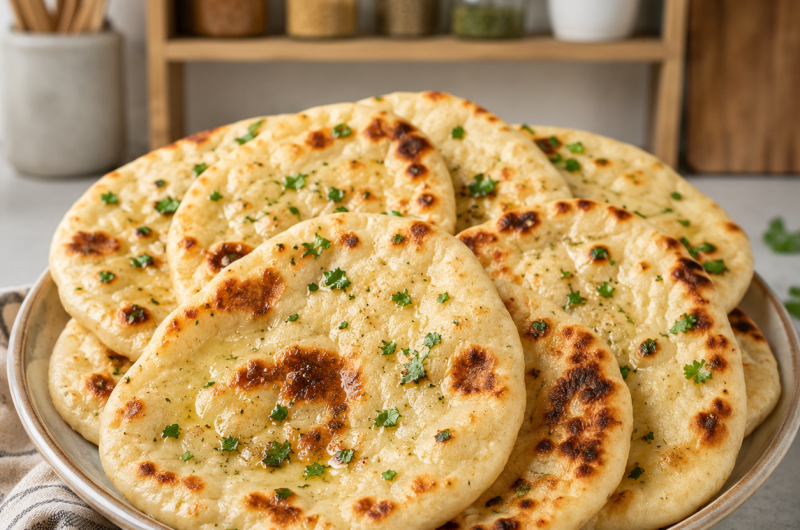
If you are searching for the best gluten free naan bread recipe, this quick and easy version is guaranteed to become a favorite in your kitchen. Unlike many gluten-free flatbreads that turn out dry or crumbly, this homemade naan is incredibly soft, chewy, and flexible. It cooks beautifully in a hot skillet, developing golden brown spots and airy bubbles that closely resemble traditional naan. The best part is that this recipe requires no yeast, no lengthy proofing time, and no complicated techniques. From mixing the ingredients to serving warm naan at the table, the entire process takes about 45 minutes, making it ideal for busy weeknight meals, family dinners, or meal preparation.
Why This Gluten Free Naan Recipe Works So Well
One of the biggest challenges when baking gluten-free bread is achieving the same elasticity and tenderness found in traditional wheat-based recipes. This naan solves that problem by combining carefully selected gluten-free flours with psyllium husk, creating a dough that behaves surprisingly like regular bread dough. It stretches easily, rolls out smoothly, and puffs beautifully during cooking. Instead of becoming dry or brittle after cooling, the naan remains soft and flexible, making it perfect for wraps, dipping into sauces, or serving with curries. These qualities have made this recipe one of the most popular homemade gluten free flatbread recipes for everyday cooking.
The Secret Behind Soft and Chewy Gluten Free Naan
Traditional naan depends on gluten to create its stretchy texture, but this recipe uses whole psyllium husk to achieve similar results. Once mixed with warm water, psyllium forms a thick gel that binds the ingredients together while adding flexibility and moisture retention. This natural gel replaces the structural role of gluten, allowing the dough to hold its shape during rolling and cooking. The finished naan develops a soft interior with lightly crisp edges, creating the familiar texture people expect from authentic naan bread.
Why No Yeast Is Needed
Unlike traditional naan recipes that require yeast and proofing time, this version relies entirely on baking powder for leavening. Baking powder produces quick expansion as soon as the dough reaches the hot skillet, creating air pockets and gentle puffing without waiting for fermentation. This simple adjustment makes the recipe much faster while still producing soft, tender bread with attractive bubbles and light charring. For busy home cooks, eliminating yeast means enjoying fresh homemade naan whenever the craving strikes.
Understanding the Gluten Free Flour Blend
Every flour in this recipe serves a specific purpose. Millet flour provides the primary structure and contributes a mild, slightly nutty flavor without overpowering the finished bread. Tapioca starch adds elasticity and creates the chewy consistency that many gluten-free breads lack. Together, these ingredients produce a balanced dough that rolls easily while maintaining excellent texture after cooking. Because the proportions have been carefully selected, the bread remains soft instead of becoming dense or crumbly.
The Importance of Psyllium Husk
Psyllium husk is the key ingredient that transforms this recipe from an ordinary gluten-free flatbread into naan with authentic texture. When mixed with warm water, it rapidly forms a thick gel that holds moisture and creates flexibility throughout the dough. This allows the naan to stretch during rolling without cracking or falling apart. It also helps trap steam while cooking, encouraging the characteristic bubbles and puffing that make freshly cooked naan so appealing.
Yogurt Adds Flavor and Tenderness
Plain or Greek yogurt contributes far more than moisture. Its mild tanginess gives the naan a pleasant depth of flavor that resembles traditional recipes. The natural acidity also works with the baking powder to improve tenderness while creating a softer crumb. Greek yogurt provides a slightly richer texture because of its thicker consistency, but either variety produces excellent results. This ingredient also helps keep the bread moist after cooling, making leftovers more enjoyable.
Olive Oil Improves Texture
Olive oil enhances both flavor and softness while making the dough easier to handle. It coats the flour particles, helping create a smooth, flexible dough that is pleasant to knead and shape. During cooking, olive oil contributes to the light golden exterior while helping the naan remain tender inside. Brushing warm naan with additional olive oil or butter after cooking creates an attractive finish and adds extra richness without changing the original recipe.
Creating the Psyllium Gel
The first preparation step is one of the most important. Mixing psyllium husk with warm water creates a thick gel within seconds. This gel should be evenly hydrated before it is combined with the remaining ingredients. Proper preparation ensures consistent moisture throughout the dough while preventing dry spots. Because psyllium begins thickening quickly, it is helpful to stir thoroughly as soon as the water is added to achieve the best possible texture.
Mixing and Kneading the Dough
Once the dry ingredients are combined, the psyllium gel, yogurt, and olive oil are added to create a soft dough. Mixing can be done by hand or with a stand mixer fitted with a dough hook. Kneading for several minutes helps distribute moisture evenly and develops a smooth, elastic consistency. Unlike many gluten-free doughs that remain sticky, this recipe produces a pleasant dough that feels flexible, soft, and easy to shape.
Resting Improves the Dough
Allowing the dough to rest for about ten minutes gives the gluten-free flours time to absorb moisture fully. This short resting period improves the dough’s elasticity, making it easier to roll without cracking. The psyllium continues absorbing liquid during this time, resulting in a more stable dough that cooks evenly. Although the resting period is brief, it significantly improves both handling and the final texture of the naan.
Rolling the Naan
After resting, the dough is divided into equal portions and rolled into smooth balls. Each portion can then be rolled into a round or oval shape approximately three to five millimeters thick. Because the dough remains flexible, there is no need for special cutters or shaping tools. A lightly floured work surface prevents sticking while allowing the dough to glide smoothly beneath the rolling pin. Even thickness ensures consistent cooking and attractive puffing across every piece.
Cooking on a Hot Skillet
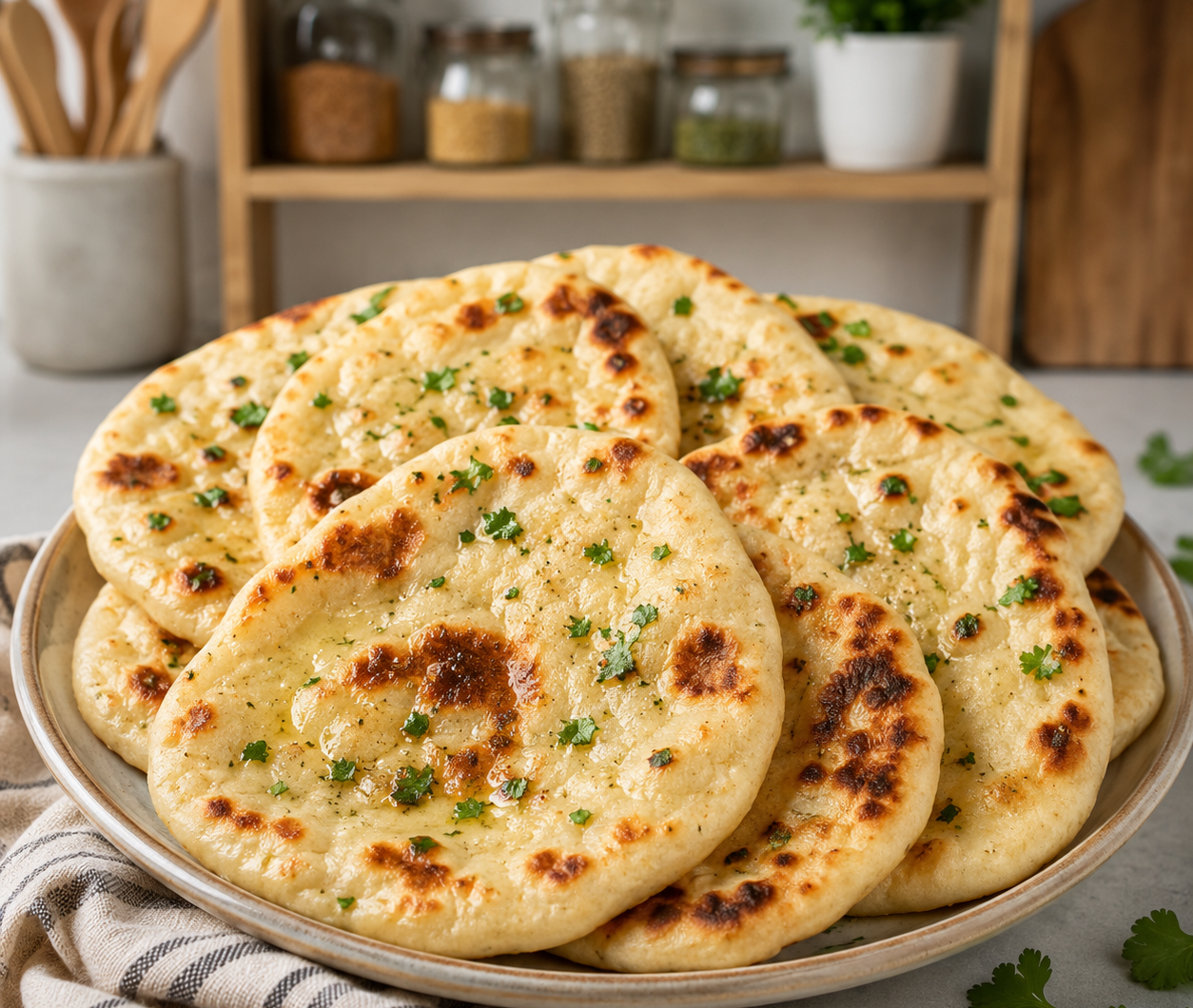
A properly heated skillet is essential for achieving authentic naan. As the dough touches the hot surface, steam forms rapidly inside the bread, creating bubbles and encouraging the naan to puff. After one to two minutes, the underside develops attractive golden brown spots before being flipped to finish cooking. The second side cooks just as quickly, producing soft bread with lightly charred patches similar to restaurant-style naan prepared in a traditional tandoor oven.
Serving Ideas for Homemade Gluten Free Naan
This versatile flatbread pairs beautifully with countless meals. It can be served alongside rich curries, comforting lentil dishes, hearty soups, grilled meats, roasted vegetables, or flavorful rice dishes. The soft texture also makes it suitable for wraps filled with grilled chicken, fresh vegetables, or falafel. Served warm with garlic butter, hummus, or yogurt-based dips, it becomes an excellent appetizer or snack. Because of its neutral flavor, it complements both traditional Indian cuisine and modern fusion meals.
Notes
Achieving the Best Texture
Always prepare the psyllium gel before mixing the remaining ingredients, as this creates the flexibility needed for soft naan. Avoid adding excessive flour while rolling because too much additional flour can make the bread dry. Cook the naan on a thoroughly heated skillet so bubbles develop quickly, producing a light interior with beautifully browned spots.
Flour Substitutions
This recipe has been carefully balanced using millet flour and tapioca starch. If different gluten-free flours are substituted, the texture may change. Alternative flour blends may require slight adjustments to the liquid content because gluten-free flours absorb moisture differently.
Storage and Reheating
Fresh naan tastes best on the day it is made, but leftovers store well in an airtight container in the refrigerator for up to two days. Reheat gently in a hot skillet or microwave until warm and soft. Cooked naan may also be frozen for up to one month. Allow it to thaw before reheating to restore its soft texture.
Why This No Yeast Gluten Free Naan Belongs in Your Recipe Collection
This Quick & Easy Gluten Free Naan Bread combines convenience, outstanding texture, and authentic flavor in one dependable recipe. The combination of millet flour, tapioca starch, psyllium husk, yogurt, and olive oil creates soft, chewy naan that is difficult to distinguish from traditional versions. Without yeast or lengthy proofing, fresh homemade naan can be prepared in less than an hour, making it ideal for busy households. Whether served with curries, soups, grilled meats, wraps, or dips, this versatile gluten-free bread delivers consistent results that both gluten-free and non-gluten-free eaters will enjoy. Once you experience its soft texture and rich flavor, it is likely to become one of your favorite homemade flatbread recipes.
Details
Quick & Easy Gluten Free Naan Bread (No Yeast)
Enjoy soft, chewy, and perfectly puffed homemade gluten free naan without using yeast. This easy skillet flatbread is made with millet flour, tapioca starch, yogurt, and psyllium husk for an authentic texture that’s ideal with curries, soups, wraps, and dips.
6
servings20
minutes15
minutes190
kcal10
minutes1
hour10
minutesIngredients
- Dry Ingredients
1½ cups (180 g) millet flour
¾ cup (90 g) tapioca starch
1 tablespoon sugar
1 teaspoon salt
2 teaspoons baking powder
2 tablespoons whole psyllium husk (or 1 tablespoon + 2 teaspoons psyllium husk powder)
- Wet Ingredients
1 cup (240 ml) warm water
½ cup (120 g) plain or Greek yoghurt
2 tablespoons olive oil
Extra olive oil (for cooking or brushing, if desired)
Directions
- In a medium bowl, combine the warm water and psyllium husk. Stir well and allow it to form a thick gel for about 15–30 seconds.
- In a large mixing bowl, whisk together the millet flour, tapioca starch, sugar, salt, and baking powder.
- Add the prepared psyllium gel, yoghurt, and olive oil to the dry ingredients.
- Mix until a dough forms, then knead by hand or with a stand mixer for 2–3 minutes until smooth and flexible.
- Cover the dough and allow it to rest for 10 minutes.
- Divide the dough into 6 equal portions and roll each into a smooth ball.
- On a lightly floured surface, roll each portion into a round or oval approximately ⅛–¼ inch (3–5 mm) thick.
- Heat a dry skillet over medium-high heat until very hot.
- Cook one naan for 1–2 minutes until bubbles appear and the underside develops golden brown spots.
- Flip and cook for another 1–2 minutes until fully cooked with lightly charred areas.
- Repeat with the remaining dough.
- Brush the warm naan with olive oil or butter if desired and keep wrapped in a clean kitchen towel until ready to serve.
Nutrition Facts
6 servings per container
- Amount Per ServingCalories190
- % Daily Value *
- Total Fat
5g
7%
- Total Carbohydrate
33g
12%
- Protein 4g 8%
* The % Daily Value tells you how much a nutrient in a serving of food contributes to a daily diet. 2,000 calories a day is used for general nutrition advice.