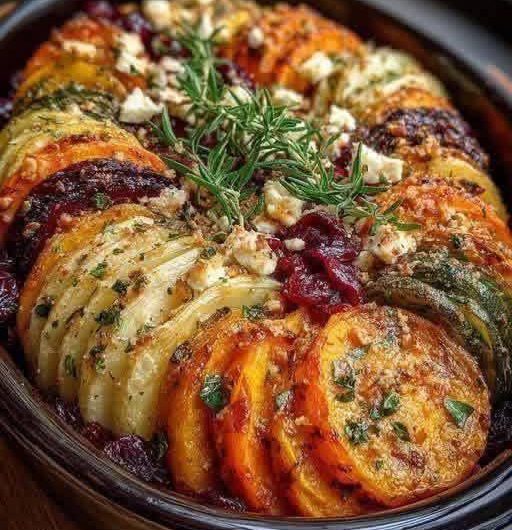
This dish is built on the idea of careful layering, controlled moisture, and gradual baking. Sweet potatoes naturally contain sugar and water, so the method used here is designed to balance softness with structure. The final result should not be mushy or dry. Instead, it should be creamy, cohesive, and sliceable, with clearly defined layers that hold together.
This is not a rushed recipe. It rewards patience and attention to detail.
Ingredient Breakdown and Purpose
Sweet Potatoes
Use large, firm sweet potatoes with smooth skin. Avoid overly fibrous or shriveled ones.
Purpose:
They form the body of the dish. Their natural sweetness contrasts with the savory cream sauce.
Salt Water Soak
Cold water mixed with salt
Purpose:
- Removes excess surface starch
- Helps slices remain separate instead of sticking
- Improves final texture
Cream Sauce Components
Butter and Flour:
These form the base thickening system. Together they create a stable structure for the sauce.
Milk:
Provides fluidity and lightness.
Heavy Cream:
Adds richness and prevents the sauce from becoming too thin or watery during baking.
Garlic:
Gives depth and aroma.
Spices:
Salt, black pepper, paprika, thyme, and nutmeg work together to balance sweetness and add warmth.
Cheese
Use a melting cheese such as cheddar or mozzarella.
Purpose:
- Adds richness
- Helps bind layers
- Creates a golden top crust
Onion (Optional)
Thin slices of onion add subtle sweetness and a slight bite.
Preparation Stage in Detail
Step 1: Washing and Peeling
Wash each sweet potato thoroughly under running water to remove dirt.
Peel using a vegetable peeler, removing all skin evenly. Any leftover peel can create tough spots in the final dish.
Step 2: Slicing Technique
Use a sharp knife or mandoline.
Slice into thin rounds approximately 2 to 3 millimeters thick.
Important details:
- Thinner slices cook faster and layer better
- Thick slices may remain undercooked
- Uneven slices cause inconsistent texture
Take your time here. This step directly affects the final outcome.
Step 3: Soaking Process
Place slices immediately into cold salted water.
Ensure all slices are submerged.
Let them soak for at least 20 minutes and up to 30 minutes.
During this time:
- Starch loosens from the surface
- Slices become slightly firmer
Step 4: Drying the Slices
Drain the water completely.
Spread slices on a clean cloth or paper towels.
Pat dry thoroughly.
This step is critical. Excess water will dilute the sauce and create a watery bake.
Sauce Preparation in Depth
Step 5: Making the Roux
Place a saucepan over medium heat.
Add butter and allow it to melt slowly without browning.
Add flour and whisk continuously.
Cook for about 1 to 2 minutes.
You are not trying to brown it deeply. A light cooking removes the raw flour taste while keeping the sauce pale.
Step 6: Adding Liquids Gradually
Pour in milk slowly while whisking.
Never dump all the liquid at once. Gradual addition prevents lumps.
Continue whisking until smooth.
Add cream and mix thoroughly.
Step 7: Seasoning and Thickening
Add garlic and all spices.
Lower heat and allow the sauce to gently simmer.
Stir occasionally.
Watch for the correct consistency:
- It should thicken enough to coat a spoon
- It should still be pourable
If too thick:
Add a small amount of milk.
If too thin:
Let it simmer slightly longer.
Assembly Process Explained
Step 8: Preparing the Baking Dish
Use a deep baking dish.
Grease thoroughly with butter, covering all surfaces.
This prevents sticking and helps with browning.
Step 9: Building the First Layer
Place sweet potato slices in a slightly overlapping pattern.
Do not leave gaps.
This base layer supports everything above it.
Step 10: Adding Sauce and Cheese
Add a controlled amount of sauce.
Do not flood the layer. Too much liquid will cause instability.
Sprinkle a moderate amount of cheese.
Add onion slices if using.
Step 11: Repeating the Layers
Continue layering in the same order:
Sweet potatoes
Onions (optional)
Sauce
Cheese
Maintain consistency in each layer.
Press down gently after every two layers to compact the structure slightly.
Aim for multiple layers rather than thick ones.
Step 12: Final Top Layer
Finish with:
- A generous coating of sauce
- A thicker layer of cheese
This top layer will form the visible crust.
Baking Phase in Detail
Step 13: Covered Baking
Cover tightly with foil.
Bake at 180°C.
Duration: about 45 minutes.
Purpose:
- Traps steam
- Softens sweet potatoes evenly
- Prevents early browning
Step 14: Uncovered Baking
Remove foil carefully.
Continue baking for 25 to 35 minutes.
Observe the following:
- Top becomes golden brown
- Edges may bubble slightly
- Knife slides easily through layers
If browning too quickly:
Lower temperature slightly or loosely cover again.
Resting Phase
Step 15: Cooling and Setting
Remove from oven.
Let it rest for at least 15 minutes.
Why this matters:
- Layers firm up
- Sauce thickens further
- Slices become easier to cut cleanly
Skipping this step can result in a loose, falling-apart dish.
Serving Method
Use a sharp knife to cut vertical portions.
Lift carefully with a spatula.
Serve warm.
Each portion should show visible layers and hold its shape.
Troubleshooting Guide
If the dish is watery:
- Slices were not dried properly
- Too much sauce was used
If the dish is too firm:
- Not enough sauce
- Slices too thick
If the top burns:
- Oven temperature too high
- Dish placed too close to upper heat
If undercooked:
- Layers too thick
- Insufficient covered baking time
Flavor Development Tips
For deeper flavor:
- Roast garlic before adding to sauce
- Use a mix of cheeses
For contrast:
- Add a slight hint of chili
For richness:
- Increase cream slightly
Storage Instructions
Refrigerate in an airtight container.
Consume within 3 days.
Reheating Details
Oven reheating is preferred.
Cover with foil and heat at low temperature until warmed through.
This keeps the texture intact.
Microwave reheating is faster but may soften the structure.