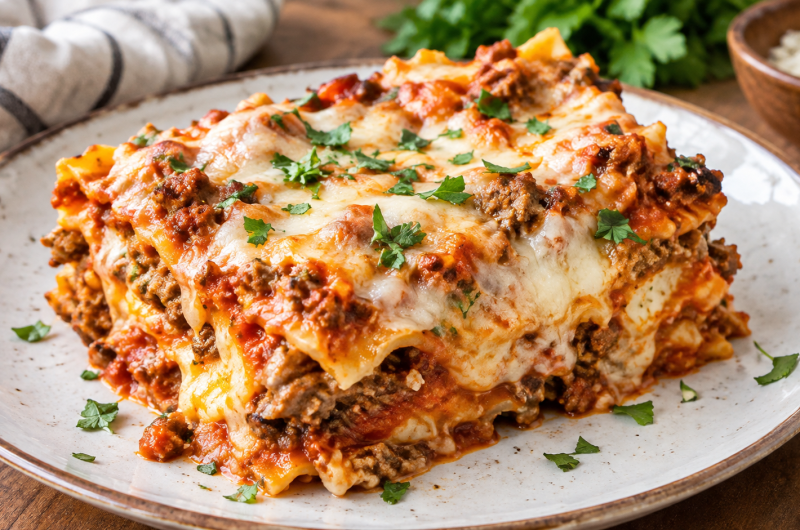
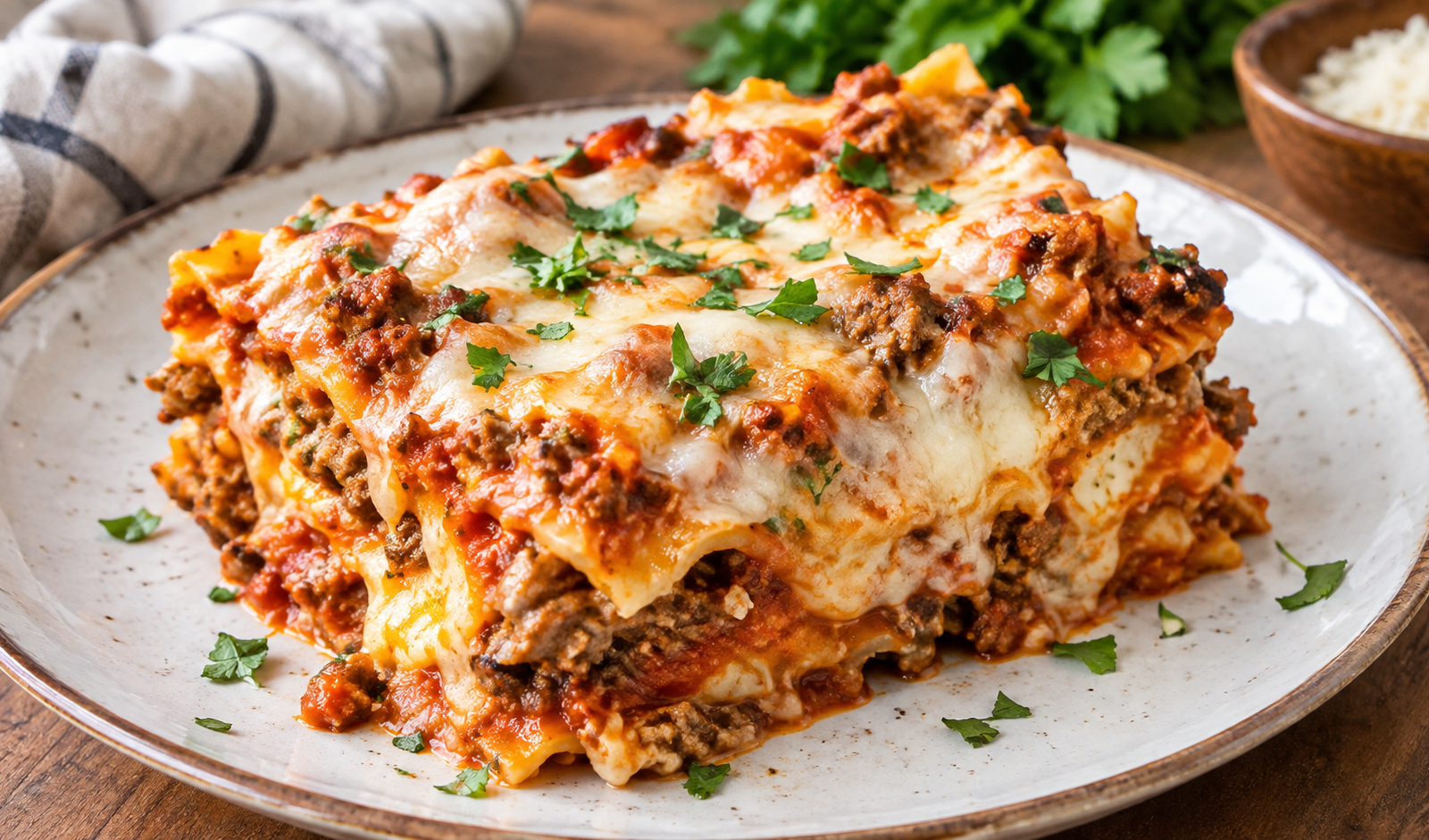
Classic Beef Lasagna is a comforting oven-baked dinner made with tender pasta sheets, rich tomato and ground beef sauce, creamy ricotta cheese, and layers of melted mozzarella and Parmesan.
This traditional-style lasagna combines simple ingredients to create a hearty meal that works beautifully for family dinners, weekend gatherings, holidays, or meal preparation. Every slice brings together savory beef, seasoned tomato sauce, and creamy cheese for a satisfying dish that tastes just as wonderful as it looks.
One of the best things about homemade beef lasagna is the balance between its layers. The pasta should be tender without becoming mushy, the meat sauce should provide plenty of moisture without making the dish watery, and the cheese should hold everything together when you cut into it. With the right layering technique and a little patience, you can prepare a delicious lasagna with neat slices, a rich flavor, and a beautifully melted cheese topping.
Why You Will Love This Classic Beef Lasagna Recipe
This easy beef lasagna recipe is ideal for anyone who wants a homemade Italian-inspired dinner without complicated cooking techniques. The ingredients are familiar, the preparation steps are straightforward, and most of the cooking happens in the oven. Although lasagna has several layers, each part is simple to prepare separately before everything is assembled in a baking dish.
The homemade meat sauce is one of the highlights of this recipe. Ground beef is cooked with onions and garlic before being combined with crushed tomatoes, tomato sauce, and Italian seasoning. Simmering the mixture allows the ingredients to blend into a savory sauce that coats the pasta and complements the creamy cheese filling. This combination creates a rich flavor throughout the lasagna instead of leaving the meat and tomato layers tasting separate.
Another reason to make this recipe is its satisfying cheese filling. Ricotta cheese mixed with egg, Parmesan, parsley, and seasonings creates a creamy layer between the noodles. Mozzarella melts throughout the dish, while extra Parmesan adds a savory finish. When the lasagna is baked until bubbling and lightly golden, the result is a comforting family meal that can be served on its own or alongside fresh vegetables and salad.
How to Prepare the Homemade Beef Sauce
Begin by heating olive oil in a large skillet over medium heat. Add the diced onions and ground beef, breaking the meat into smaller pieces with a spoon or spatula. Cook until the beef is thoroughly browned and no pink remains. Stir occasionally so the onions soften and the meat cooks evenly rather than forming large clumps.
Add the chopped garlic and cook for approximately one minute, stirring continuously to release its aroma without allowing it to burn. Drain excess drippings from the skillet before adding the crushed tomatoes and tomato sauce. Stir in the Italian seasoning, garlic powder, kosher salt, and black pepper until the ingredients are evenly distributed.
Bring the sauce to a gentle simmer, then reduce the heat to low. Cover the skillet partially and cook for 20 minutes, stirring occasionally. This simmering time helps the tomato flavor develop and allows the herbs to season the beef throughout. The finished sauce should be moist enough to coat the pasta but not excessively watery. A well-balanced sauce is important because too much liquid can make the lasagna difficult to slice cleanly.
How to Make the Ricotta Cheese Filling
While the sauce simmers, prepare the cheese mixture in a medium-sized bowl. Add the ricotta cheese, beaten egg, kosher salt, black pepper, optional grated nutmeg, grated Parmesan, and chopped fresh parsley. Stir until the ingredients are evenly combined and the mixture has a consistent texture.
The egg helps the ricotta filling set as it bakes, giving the cheese layer more structure. Parmesan provides extra flavor, while parsley adds freshness. Mix gently rather than beating the ingredients excessively, and scrape the sides of the bowl so the seasonings are evenly distributed.
Preparing the filling before assembling the lasagna makes the process more organized. Keep the cooked noodles, meat sauce, ricotta mixture, and grated mozzarella close to the baking dish. Having everything ready allows you to build the layers efficiently and reduces the chance of leaving gaps or using too much filling in one section.
Baking Classic Beef Lasagna to Perfection
Preheat the oven to 375°F (190°C) before assembling or baking the dish. Once the layers are complete, lightly coat one side of a piece of aluminum foil with cooking spray, or use nonstick aluminum foil. Cover the baking dish with the coated side facing the cheese so the foil is less likely to stick to the topping.
Bake the covered lasagna for 30 minutes. Keeping it covered during this stage helps retain moisture and allows the layers to heat through without drying out. The pasta, meat sauce, and cheese filling need time to warm together, so avoid removing the foil too early.
After 30 minutes, carefully remove the foil and return the baking dish to the oven for another 15 minutes. This uncovered stage allows excess surface moisture to evaporate and gives the mozzarella time to melt, bubble, and develop light golden spots. The finished lasagna should look moist around the edges, with the cheese fully melted and the sauce bubbling.
Ovens can vary, so pay attention to the appearance of the dish near the end of the cooking time. If the cheese needs a little more color, continue baking briefly while checking regularly. Avoid leaving it uncovered for too long, because excessive baking can dry the top and edges.
Why Resting Time Matters Before Serving
Once the lasagna comes out of the oven, allow it to rest for 10 to 15 minutes before cutting. This short resting period is an important step because the sauce and melted cheese are extremely hot immediately after baking. Cutting too soon can cause the layers to slide apart and spread across the plate.
As the lasagna rests, the cheese filling firms slightly and the sauce settles around the pasta. This makes it easier to cut clean squares and lift them from the dish with a wide spatula. The individual layers remain visible, giving each serving an attractive appearance.
For the neatest portions, use a sharp knife to cut through the pasta, then slide a spatula underneath each piece. Wipe the knife between cuts if needed. Even if the first slice is not perfectly square, allowing sufficient resting time generally makes the remaining portions easier to serve.
What to Serve with Beef Lasagna
Classic beef lasagna is a filling main course, but a few simple side dishes can turn it into a complete dinner. A crisp Caesar salad provides freshness and a pleasant contrast to the rich meat sauce and cheese. Mixed green salad with a light dressing is another option if you prefer something simple.
Garlic bread is a popular accompaniment because its crisp edges and buttery garlic flavor complement the tomato sauce. Serve it in small slices so guests can use it to scoop up any sauce remaining on their plates. Roasted vegetables, steamed green beans, or sautéed zucchini can also add color and variety to the meal.
For a family gathering, arrange the lasagna in the center of the table and serve the side dishes separately. This makes it easy for everyone to choose their preferred portions. Because the recipe yields eight servings, it works well for a shared meal, and leftovers can provide convenient lunches or dinners for another day.
Make-Ahead, Storage, and Reheating Tips
Preparing lasagna ahead of time
Lasagna can be assembled in advance when you want to reduce the work required on serving day. Prepare the meat sauce, mix the ricotta filling, cook the noodles, and assemble the layers in the baking dish. Cover and refrigerate the unbaked dish if you plan to bake it within a suitable refrigerated storage period.
For food safety, refrigerate prepared lasagna promptly rather than leaving it at room temperature for an extended period. If the dish is cold when placed in the oven, it may need additional baking time to heat completely. Use the bubbling sauce and a hot center as signs that it is ready, checking the center with a food thermometer if necessary.
Storing leftover beef lasagna
Allow leftover lasagna to cool slightly, then transfer it to airtight containers and refrigerate within two hours of cooking. Properly refrigerated leftovers should generally be eaten within three to four days. Keeping portions separate makes it easier to reheat only what you need while maintaining the quality of the remaining servings.
For longer storage, freeze the lasagna in individual portions or suitable freezer-safe containers. Protect the pieces from air exposure to reduce freezer burn. Label the containers with the date so you can keep track of storage time. Thaw frozen portions in the refrigerator when possible before reheating.
Reheating without drying it out
To reheat a larger portion in the oven, place it in an oven-safe dish and cover it with foil. Heat until the center is thoroughly hot, removing the foil near the end if you want to refresh the cheese topping. Adding a small spoonful of water or sauce around a portion can help restore moisture if the edges seem dry.
Individual slices can also be reheated in a microwave-safe dish. Cover loosely to reduce splattering and heat in intervals until the center is hot, allowing a brief pause between intervals for more even heating. Reheated leftovers should reach an internal temperature of 165°F (74°C).
Common Mistakes to Avoid When Making Lasagna
One common mistake is using too much sauce between the layers. Although lasagna needs moisture, excess liquid can make it difficult to cut and serve. Follow the ingredient quantities and spread the sauce evenly rather than pouring it heavily into the center. Simmering the sauce for the full recommended time also helps develop its texture and flavor.
Overcooked noodles can create another problem. Because the pasta continues cooking in the oven, boiling it a minute or two less than the package directions helps it retain its structure. Drain the noodles carefully and separate them after rinsing so they do not become one large, sticky mass.
Uneven cheese layers can cause the finished lasagna to slide apart. Distribute the ricotta mixture across the noodles in moderate amounts, and avoid piling too much mozzarella into a single layer. Finally, do not skip the resting period after baking. Allowing the lasagna to stand for 10 to 15 minutes makes a noticeable difference in how well the slices hold together.
Frequently Asked Questions About Classic Beef Lasagna
Can I use a different type of ground meat?
This recipe is specifically designed around ground beef, which gives the sauce its familiar savory flavor. Other ground meats can be used in adapted versions, but they may have different fat levels and cooking characteristics. For the classic flavor and texture intended here, follow the original ingredient list and use the specified amount of ground beef.
Why is my beef lasagna watery?
Watery lasagna can result from excess sauce, ingredients releasing moisture, or cutting the dish before it has rested. Simmering the meat sauce for 20 minutes, following the listed quantities, and allowing the baked lasagna to rest before serving can help improve the texture. Keeping the cheese layers moderate also helps the portions remain stable.
Can I prepare the cheese filling in advance?
Yes. The ricotta filling can be mixed ahead of time and stored in a covered container in the refrigerator. Keep it chilled until you are ready to assemble the lasagna, and avoid leaving the mixture at room temperature for long periods. Preparing it in advance can make the final assembly quicker and easier.
How do I know when the lasagna is fully cooked?
The lasagna should be hot throughout, with bubbling sauce around the edges and melted mozzarella on top. The covered baking stage heats the layers, while the final uncovered stage helps the cheese develop color. If you need to verify the temperature, check the center with a food thermometer.
Can I freeze cooked beef lasagna?
Yes. Cooked lasagna can be frozen in portions for convenient future meals. Let it cool appropriately, package it in freezer-safe containers, and label the portions. Thaw in the refrigerator when possible and reheat thoroughly until the center reaches 165°F (74°C).
Classic Beef Lasagna recipe
A hearty homemade beef lasagna featuring seasoned ground beef tomato sauce, tender lasagna noodles, creamy ricotta filling, and layers of mozzarella and Parmesan cheese.
8
servings25
minutes45
minutes1
hour10
minutesIngredients
- For the sauce
2 tablespoons olive oil
1/2 cup diced onions
1 1/2 pounds ground beef
1 tablespoon chopped garlic
1–28 ounce can crushed tomatoes
1–28 ounce can tomato sauce
2 teaspoons Italian seasoning
1 teaspoon garlic powder
1 teaspoon kosher salt
Black pepper to taste
- For the lasagna
16–18 lasagna noodles (typically in one box)
32 ounces ricotta cheese (we prefer whole milk)
1 egg, beaten
Black pepper to taste
1/8 teaspoon grated nutmeg (optional)
1/4 cup grated Parmesan cheese (plus more for assembling the lasagna)
2 tablespoons chopped fresh parsley
16 ounces of mozzarella cheese (buy it whole and grate it yourself)
Directions
- Set the oven to 375°F (190°C).
- Boil the noodles for a minute or two less than the package directions. Drain, rinse with cold water, and separate them to prevent sticking.
- Heat olive oil in a large skillet over medium heat. Add the diced onions and ground beef. Break the beef into small pieces and cook until no pink remains.
- Stir in the chopped garlic and cook for one minute. Drain any excess drippings from the skillet.
- Add the crushed tomatoes, tomato sauce, Italian seasoning, garlic powder, kosher salt, and black pepper. Stir well and bring to a simmer. Reduce the heat to low and simmer partially covered for 20 minutes.
- In a medium bowl, combine the ricotta cheese, beaten egg, kosher salt, black pepper, optional nutmeg, Parmesan cheese, and chopped parsley. Mix until evenly combined.
- Spread a thin layer of meat sauce across the bottom of a 9-by-13-inch baking dish. Arrange four lasagna noodles over the sauce.
- Spread about one-third of the ricotta mixture over the noodles. Add mozzarella and a sprinkle of Parmesan, then cover the cheese with meat sauce.
- Repeat the layering process two more times, distributing the ricotta, mozzarella, Parmesan, and sauce evenly.
- Add approximately four noodles on top. Spread the remaining meat sauce over them, followed by the remaining mozzarella and another sprinkle of Parmesan.
- Spray one side of aluminum foil with cooking spray, or use nonstick foil. Cover the dish and bake for 30 minutes.
- Remove the foil and bake for another 15 minutes, until the cheese is bubbling and lightly browned.
- Remove the lasagna from the oven and let it stand for 10–15 minutes before slicing. Serve warm.