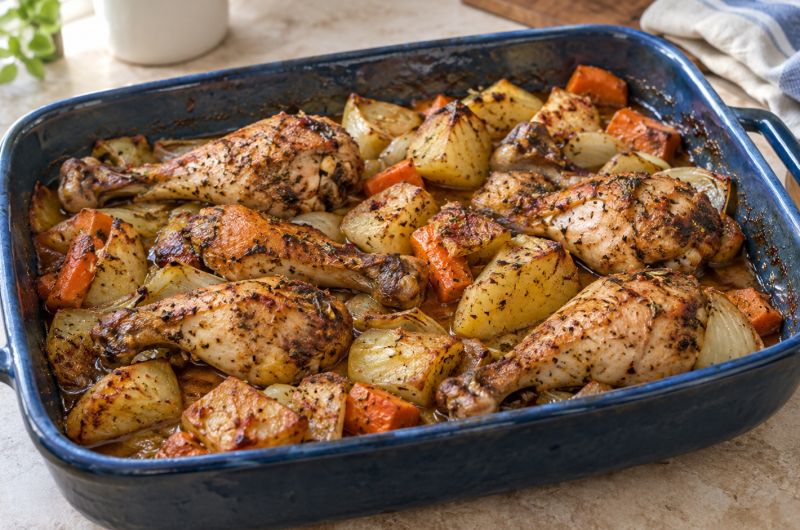
Healthy roasted chicken drumsticks with potatoes and carrots make a comforting, flavorful, and affordable dinner that is easy to prepare in one pan. This oven-roasted chicken recipe combines juicy chicken legs, tender Yukon Gold potatoes, sweet carrots, and onions with simple herbs, garlic seasoning, olive oil, and chicken broth. As everything cooks together, the ingredients develop rich flavors, creating a satisfying homemade meal without requiring complicated cooking techniques or expensive ingredients.
One-pan roasted chicken and vegetables are an excellent choice for busy families, students, beginners, and anyone who wants a filling dinner with minimal preparation. The ingredients are easy to find at most grocery stores, and the recipe uses everyday pantry seasonings to bring out the natural taste of the chicken and vegetables. With approximately 10 minutes of preparation and a little over an hour in the oven, you can prepare a complete main course with very little hands-on effort.
Another reason to enjoy this healthy chicken drumstick recipe is its practical approach to cooking. Instead of preparing meat, potatoes, and vegetables in separate pots and pans, everything cooks in the same baking dish. The chicken juices blend with the broth and seasonings, helping create a flavorful cooking liquid that can be thickened into a simple gravy. The result is a hearty, home-cooked meal that works well for family dinners, weekly meal preparation, and relaxed weekend cooking.
Why You Will Love This One-Pan Chicken Dinner
There are plenty of reasons to add roasted chicken drumsticks with potatoes and carrots to your regular meal rotation. First, chicken drumsticks are generally an economical cut of poultry, making them useful when you want to prepare a generous meal without spending too much. They also contain bone-in meat that stays flavorful during roasting, while the skin can become nicely browned when exposed to the oven’s heat.
The vegetables make this meal even more convenient because they cook alongside the chicken. Yukon Gold potatoes develop a soft, creamy interior, while carrots become tender and slightly sweet. Chopped sweet onion adds another layer of flavor as it softens in the broth and chicken juices. Together, these ingredients create a balanced combination of savory chicken, satisfying potatoes, and colorful vegetables in a single baking dish.
This recipe is also beginner-friendly because the preparation is straightforward. You do not need advanced knife skills, special cooking equipment, or a complicated marinade. Simply season the chicken, prepare the vegetables, arrange everything in the pan, and allow the oven to do most of the work. The final cornstarch mixture thickens the cooking liquid into a light gravy, making the finished dish feel hearty and complete.
Ingredients That Make This Recipe Delicious
Chicken drumsticks
Chicken drumsticks are the main protein in this oven-roasted chicken dinner. Their natural flavor pairs well with garlic powder, black pepper, thyme, oregano, and olive oil. Bone-in drumsticks are especially suitable for this cooking method because they can remain juicy while the meat becomes tender. Patting the chicken dry before seasoning also helps remove excess surface moisture, allowing the seasonings to coat the meat more evenly.
Yukon Gold potatoes
Yukon Gold potatoes are an excellent choice for roasted chicken and vegetables because their naturally buttery texture becomes soft and creamy during cooking. Keeping the skin on adds texture and saves preparation time, provided the potatoes are washed thoroughly before cutting. Dividing each potato into four pieces helps the pieces cook evenly alongside the chicken. If the potatoes vary significantly in size, aim for similarly sized chunks to encourage consistent tenderness.
Carrots and sweet onion
Carrots contribute natural sweetness, color, and a tender texture to this one-pan meal. Peeling them and cutting them into chunks helps them cook evenly without becoming too small during the roasting process. Sweet onion adds depth to the dish as it softens in the chicken broth. The onion also helps flavor the vegetables and cooking liquid, creating a delicious base for the simple gravy prepared at the end.
Olive oil and dried herbs
Olive oil helps distribute the seasonings over the chicken and vegetables while encouraging a flavorful roasted finish. Garlic powder provides a savory aroma without requiring fresh garlic, while dried thyme and oregano add familiar herbal notes that complement poultry. Salt and black pepper bring the flavors together. These seasonings are simple, but their combination works particularly well with potatoes, carrots, and the natural juices released during roasting.
Chicken broth and cornstarch
Chicken broth supplies moisture to the baking dish and helps prevent the vegetables from drying out during the long roasting time. It also combines with the chicken juices and seasonings to create a flavorful liquid. Cornstarch mixed with cold water is added after the chicken is removed from the dish. This mixture thickens the liquid into a gravy, coating the vegetables with a smooth, savory sauce.
Tips for the Best Roasted Chicken Drumsticks
Pat the chicken dry before seasoning
Drying the surface of the chicken is a simple step that improves the overall cooking process. Excess moisture can dilute the seasoning mixture and interfere with browning. Use paper towels to remove surface moisture before adding the olive oil and herbs. If you prefer crispier skin, avoid covering the chicken during roasting and leave some space between the drumsticks whenever the size of your baking dish allows it.
Cut the vegetables into even pieces
Uniform vegetable pieces cook more consistently than a mixture of very large and very small chunks. Cut the potatoes into four reasonably similar pieces and keep the carrot chunks close in size. This helps prevent smaller pieces from becoming overly soft while larger pieces remain firm. If your potatoes are particularly large, choose pieces that are similar in thickness so they can become tender during the same roasting period.
Pour the broth around the edges
Adding broth around the sides of the dish helps preserve the seasoning on the chicken. The liquid will spread beneath the vegetables and combine with the juices released by the meat. Because this recipe uses broth to create a gravy, avoid adding excessive liquid beyond the amount listed. Too much broth may make the finished sauce thinner and can reduce the roasted character of the vegetables.
Check the chicken before serving
Oven temperatures and the size of chicken drumsticks can vary, so cooking time should not be the only indicator of doneness. Use a food thermometer to confirm that the thickest part of each drumstick reaches at least 165°F (74°C), without touching the bone. If a drumstick needs more time, continue cooking and check again. Make sure the potatoes and carrots are tender before serving the finished meal.
What to Serve with Roasted Chicken and Vegetables
This one-pan chicken dinner already includes protein and vegetables, so it can be served as a complete meal without many additional side dishes. The tender potatoes and carrots absorb the flavorful cooking liquid, while the chicken provides a satisfying centerpiece. Spoon some of the thickened gravy over the vegetables and chicken just before serving to bring the different ingredients together.
If you want to expand the meal, consider serving it with a simple green salad, steamed green beans, or lightly cooked broccoli. These options add freshness and color without making dinner unnecessarily complicated. A small portion of crusty bread can also be useful for enjoying any remaining gravy. For a lighter meal, serve one drumstick with a generous helping of carrots and potatoes, adjusting the portions to suit your appetite.
Meal Prep, Storage, and Reheating
Roasted chicken drumsticks with potatoes and carrots are practical for meal preparation because the ingredients hold up well after cooking. Allow leftovers to cool slightly, then refrigerate them in shallow, airtight containers within two hours of cooking. Store the chicken, vegetables, and gravy together or in separate containers, depending on how you prefer to portion your meals. Properly refrigerated cooked chicken leftovers should generally be used within three to four days.
For reheating, place a portion of chicken and vegetables in an oven-safe dish, add a spoonful of gravy or broth if needed, and cover loosely to help prevent the food from drying out. Heat until the center reaches 165°F (74°C). You can also use a microwave-safe container, covering the food loosely and stirring or rearranging the vegetables halfway through heating. Reheated chicken skin may be softer than freshly roasted skin, but the meat and vegetables can still taste delicious.
For longer storage, freeze the cooked chicken and vegetables in freezer-safe containers. Although they can remain safe longer when continuously frozen at 0°F (-18°C), using them within about two to three months is a practical way to maintain better flavor and texture. Thaw frozen leftovers in the refrigerator before reheating. Avoid leaving cooked chicken at room temperature for extended periods, and do not rely on smell or appearance alone to determine whether leftovers are safe.
Recipe Variations and Simple Adjustments
This recipe works well as written, but a few serving adjustments can make it easier to fit different meal plans. For example, you can serve smaller portions of potatoes alongside extra carrots, or divide the finished meal into individual containers for weekday lunches. Keep in mind that changing the quantity or size of the ingredients may affect the cooking time, so always check the tenderness of the vegetables and the internal temperature of the chicken.
You can also adjust the way the finished gravy is served. Some people prefer to spoon a small amount over the chicken and vegetables, while others enjoy serving it separately at the table. If the sauce becomes thicker than expected, stir in a small amount of warm broth until it reaches a suitable consistency. If it is too thin, heat it gently for a little longer or prepare a small additional cornstarch slurry, adding it gradually.
For a lower-sodium meal, choose unsalted or low-sodium chicken broth as specified in the ingredients and adjust the added salt according to your needs. Olive oil provides the fat used to coat the ingredients, while the vegetables add texture and variety. Although this recipe includes nutritious ingredients, its overall nutritional profile depends on the portion size, the amount of chicken skin consumed, and the exact products used.
Frequently Asked Questions
Can I prepare this recipe ahead of time?
Yes. You can wash and cut the vegetables ahead of time and keep them refrigerated in a covered container until you are ready to cook. The chicken can also be seasoned shortly before roasting. For the best texture, roast the ingredients close to serving time when possible, then refrigerate any leftovers promptly. If you prepare the whole meal in advance, reheat it thoroughly before serving.
Can I use chicken thighs instead of drumsticks?
Chicken thighs may work as a substitute, but their size, bone structure, and cooking time can differ from those of drumsticks. Arrange them in the baking dish as evenly as possible and check their internal temperature with a thermometer. If you change the type or quantity of chicken, allow for adjustments to the roasting time while keeping the potatoes and carrots tender.
Why is the cornstarch mixed with cold water?
Cornstarch dissolves more easily in cold water before it is added to hot liquid. Making a smooth slurry first reduces the chance of lumps forming in the gravy. Stir the mixture immediately before adding it to the baking dish, since cornstarch can settle at the bottom of the bowl. Gently distribute it through the cooking liquid and allow the sauce to thicken.
How do I know when the potatoes and carrots are ready?
The vegetables are ready when a fork or small knife slides into the thickest pieces without much resistance. Potato pieces should feel tender inside rather than firm or crunchy, while the carrots should be soft but still hold their shape. If the chicken has reached a safe temperature but some vegetables remain firm, continue cooking until they are tender, checking the dish regularly.
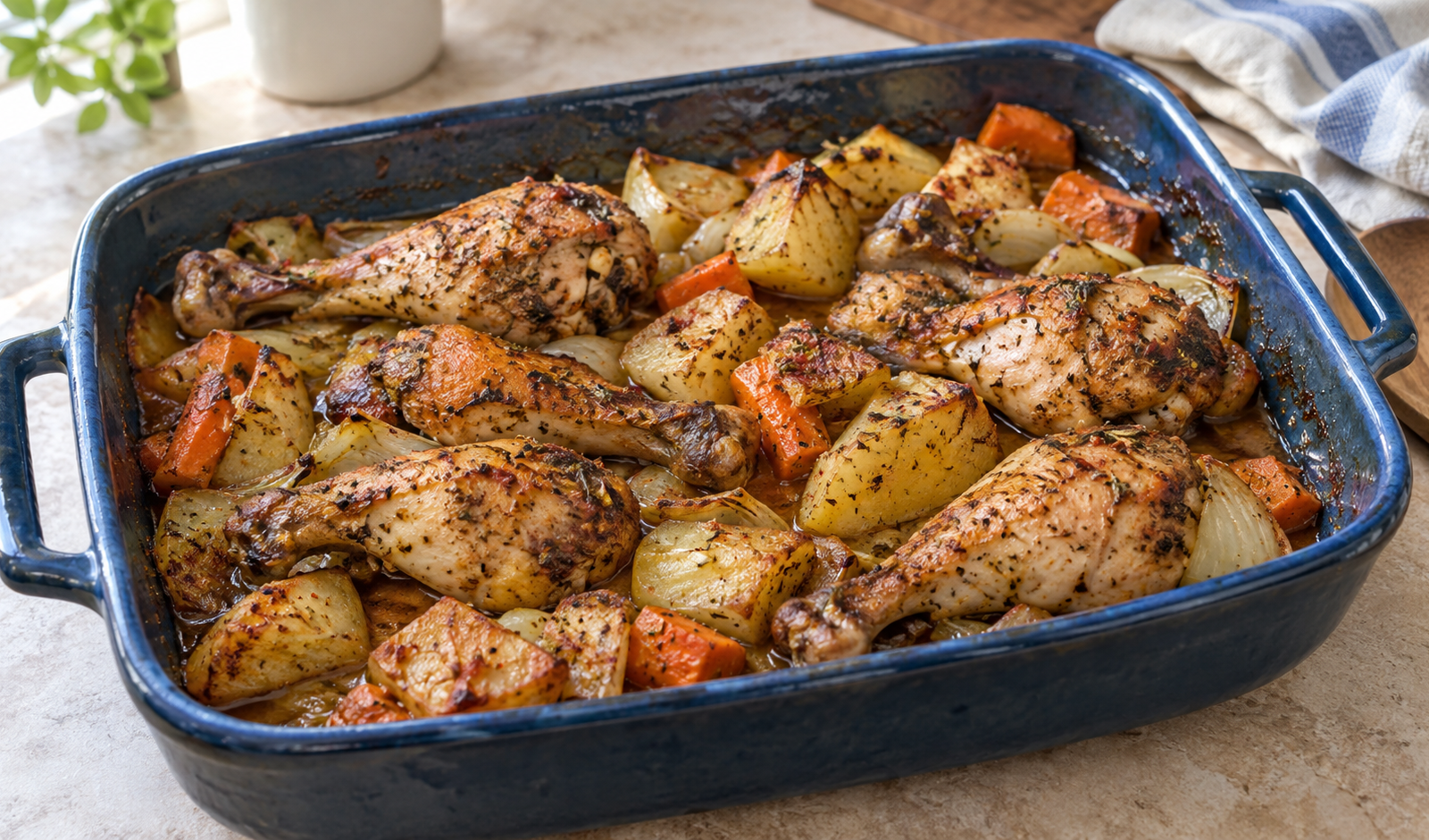
Healthy Roasted Chicken Drumsticks with Potatoes and Carrots recipe
A hearty one-pan dinner with seasoned chicken drumsticks, tender potatoes, carrots, and homemade gravy.
8
servings10
minutes1
hour1
hour10
minutesIngredients
2 lbs drumsticks (about 8)
1 ½ lbs Yukon Gold potatoes with skin, cut into 4 pieces
1 cup chicken broth or stock, unsalted or low-sodium
4 tbsp olive oil, divided
1 ½ tsp salt
1 tsp black pepper
1 tsp garlic powder
1 tsp dried thyme
1 tsp dried oregano
2 large carrots, peeled and cut into chunks
1 medium sweet onion, chopped
- Cornstarch mixture
2 tbsp cornstarch
2 tbsp cold water
Directions
- Preheat the oven to 425°F (232°C).
- Pat the drumsticks dry. Toss them with 2 tablespoons of olive oil, salt, black pepper, garlic powder, and dried thyme, rubbing the seasoning over the chicken.
- Place the potatoes, carrots, and chopped onion in a 13 × 9-inch baking dish. Add the remaining 2 tablespoons of olive oil, season with salt and pepper, and mix well.
- Arrange the seasoned drumsticks over the vegetables. Slowly pour the chicken broth around the edges of the dish, avoiding the tops of the chicken.
- Bake for 25 minutes. Carefully remove the dish, turn the drumsticks over, and bake for another 35 minutes, or until the chicken reaches an internal temperature of at least 165°F (74°C) and the vegetables are tender.
- Transfer the chicken to a plate and cover loosely with foil. In a small bowl, stir the cornstarch and cold water together until smooth.
- Pour the cornstarch slurry into the hot cooking liquid. Gently swirl the vegetables to distribute it and allow the gravy to thicken for several minutes. If needed, heat the liquid gently until it reaches the desired consistency.
- Serve the roasted drumsticks with the potatoes and carrots, spooning the thickened gravy over the top.