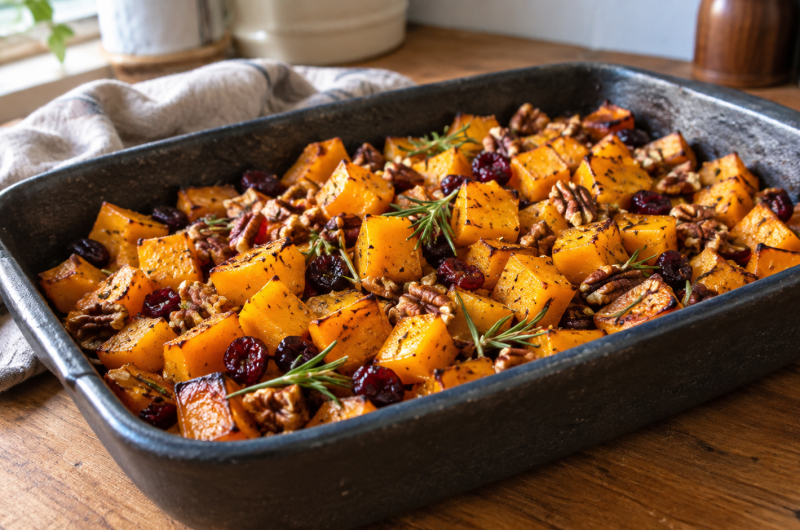
Maple roasted butternut squash is a delicious, easy-to-make side dish that combines the natural sweetness of winter squash with the rich flavor of pure maple syrup, fresh garlic, olive oil, and aromatic thyme. Roasting the squash in a hot oven creates tender pieces with beautifully caramelized edges, making this recipe a wonderful addition to holiday dinners, family gatherings, and everyday meals. With a handful of simple ingredients and minimal preparation, you can prepare a flavorful vegetable side dish that looks impressive without requiring complicated cooking techniques.
This roasted butternut squash recipe is especially useful when you need a side dish that complements a wide range of main courses. The maple glaze enhances the squash’s natural sweetness, while garlic, black pepper, and fresh thyme provide a savory balance. Each bite offers a pleasant combination of soft centers and lightly browned edges. Because the recipe uses olive oil instead of butter and contains no dairy ingredients, it is naturally vegan when prepared with suitable ingredients, making it a convenient option for guests with different dietary preferences.
Why You’ll Love This Maple Roasted Butternut Squash Recipe
One of the best things about maple roasted butternut squash is its simplicity. You do not need an elaborate sauce, a long list of seasonings, or special cooking equipment to achieve excellent results. A baking sheet, a mixing bowl, and a sharp knife are enough to prepare this dish. The oven handles most of the cooking, allowing you to focus on preparing the rest of your meal while the squash becomes tender and develops its golden, caramelized surface.
The flavor is another reason this recipe works so well. Butternut squash has a naturally sweet, mildly nutty taste that becomes more pronounced during roasting. Pure maple syrup complements those flavors without overpowering them, while fresh garlic adds depth and thyme contributes an earthy aroma. Salt and black pepper help bring everything together, creating a balanced side dish that tastes sweet, savory, and fresh rather than like a dessert.
This recipe is also suitable for several occasions. Serve it alongside a traditional Thanksgiving dinner, include it in a Christmas menu, or prepare it as a weeknight vegetable side for roasted chicken, turkey, or other main dishes. Optional pecans and dried cranberries can add contrasting textures and colors, making the finished dish especially attractive when served at a festive gathering.
Ingredients for Maple Roasted Butternut Squash
The ingredients in this recipe are easy to find, and each one contributes something important to the final flavor. Using fresh squash, pure maple syrup, and freshly prepared garlic helps create a more satisfying result. Before beginning, measure the seasonings and prepare the squash so everything can be mixed and transferred to the oven without unnecessary delays.
Butternut Squash
Butternut squash is the main ingredient and provides the tender texture and naturally sweet flavor that make this side dish so appealing. Choose a firm squash with smooth skin and no soft spots. Peel it, remove the seeds, and cut the flesh into evenly sized half-inch cubes. Uniform pieces are important because they help the squash cook at a similar rate, reducing the chance of having some pieces turn mushy while others remain firm.
If you want to save preparation time, fresh pre-cut butternut squash is a convenient alternative. Check that the pieces are reasonably uniform in size before using them. Larger cubes may require additional roasting time, while smaller pieces can brown more quickly. Keeping the pieces close to the recommended size helps ensure that the squash becomes tender inside while developing caramelized edges.
Pure Maple Syrup
Pure maple syrup provides the signature flavor in this maple glazed butternut squash recipe. Its natural sweetness complements the squash and encourages a lightly caramelized surface during roasting. For the best flavor, choose pure maple syrup rather than pancake syrup, which may contain artificial flavorings and other sweeteners. The maple syrup should coat the squash lightly instead of creating a thick layer that collects on the baking sheet.
Olive Oil
Olive oil helps distribute the glaze ingredients across the squash and supports even roasting. It also helps the edges brown while keeping the centers tender. Measure the oil carefully so the squash is coated without becoming greasy. If you prefer, avocado oil can be used as an alternative with a similarly useful role in roasting. The important point is to coat the pieces evenly before placing them in the oven.
Fresh Garlic
Freshly minced garlic adds a savory flavor that balances the sweetness of the maple syrup. As the squash roasts, the garlic becomes fragrant and blends with the oil and maple glaze. Mince the cloves finely so the flavor spreads throughout the dish. Avoid leaving large pieces of garlic concentrated on the baking sheet, as exposed garlic may brown faster than the squash during the cooking process.
Fresh Thyme
Fresh thyme brings a gentle, earthy aroma that works particularly well with roasted winter vegetables. Remove the small leaves from the stems before adding them to the glaze. The leaves distribute easily among the squash cubes and complement both the garlic and maple syrup. You can also reserve a little extra thyme for garnish after cooking, giving the dish a fresh appearance and a pleasant herbal aroma when it reaches the table.
Salt and Black Pepper
Kosher salt and ground black pepper provide essential seasoning. Salt enhances the squash’s natural flavor, while black pepper introduces a mild warmth that keeps the maple glaze from tasting one-dimensional. Measure the seasonings according to the recipe, then mix them thoroughly with the other glaze ingredients. Even seasoning is important because the squash should taste balanced throughout rather than sweet in some bites and bland in others.
Optional Pecans and Dried Cranberries
Pecans and dried cranberries are optional toppings that add extra texture, color, and flavor. Pecans provide a pleasant crunch and a nutty taste, while dried cranberries introduce a sweet-tart contrast to the roasted squash. Sprinkle them over the dish after roasting rather than exposing them to the full cooking time. This helps preserve their texture and prevents the nuts from becoming overly browned.
Tips for Perfectly Roasted Butternut Squash
Cut Evenly Sized Cubes
Consistent cube size is one of the simplest ways to improve your results. Pieces that are approximately half an inch thick should cook at a similar rate, helping you avoid a mixture of undercooked centers and overly soft edges. If some pieces are noticeably larger, cut them down before adding the glaze. Taking a little extra time during preparation can make the roasting stage much more predictable.
Avoid Overcrowding the Baking Sheet
Allowing enough room between the cubes encourages roasting and browning. When too many pieces are crowded together, moisture becomes trapped, and the squash may turn soft without developing the desired caramelized edges. Use a large rimmed baking sheet or divide the squash between two trays if necessary. Keep the pieces in a single layer and avoid stacking them.
Choose Pure Maple Syrup
Pure maple syrup provides a more natural maple flavor than artificially flavored pancake syrup. Because the glaze contains only a few ingredients, the quality of each component has a noticeable effect on the finished dish. Use the amount specified in the recipe to complement the squash without making the dish excessively sweet or leaving too much sticky glaze on the baking surface.
Turn the Squash Halfway Through Cooking
Turning the squash during roasting helps expose different surfaces to the hot baking sheet and oven air. This encourages more even browning and reduces the chance that the bottoms will darken before the tops are ready. Use a thin spatula and turn the pieces gently, especially as they begin to soften. If your oven has hot spots, rotate the baking sheet as well.
Broil Briefly if Needed
If the squash is already tender but the edges have not browned as much as you would like, a short period under the broiler can help. Broil for one to two minutes, watching continuously to prevent burning. The maple glaze contains natural sugars that can darken rapidly under intense heat, so remove the tray as soon as the surface looks sufficiently caramelized.
What to Serve with Maple Roasted Butternut Squash
This versatile vegetable side dish pairs particularly well with roasted turkey, chicken, and other savory main courses. Its maple sweetness complements herbs, garlic, and roasted meats, making it a natural choice for Thanksgiving dinner or a Christmas meal. For a holiday spread, serve it alongside roasted turkey breast and green bean casserole to create a balanced selection of vegetables and main dishes with different textures and flavors.
For everyday dinners, pair the squash with baked chicken, roasted vegetables, grain-based dishes, or a hearty salad. The soft texture also works well beside lentils, beans, or other plant-based main courses. Because the recipe is naturally dairy-free and vegan when all ingredients are suitable, it can be a helpful addition to a menu designed for guests who avoid animal products.
You can also include the roasted squash in a warm grain bowl with rice, quinoa, or another preferred grain. Add leafy greens or roasted vegetables for more variety, keeping in mind that any additional ingredients will change the overall nutritional values of the meal. Whether served as part of a festive dinner or a simple weeknight plate, the sweet and savory flavor of the squash makes it easy to pair with many foods.
Frequently Asked Questions
Can I Use Pre-Cut Butternut Squash?
Yes, fresh pre-cut butternut squash is a convenient option when you want to reduce preparation time. Check the cubes before cooking and cut any unusually large pieces to match the recommended half-inch size. Even pieces cook more consistently, helping the squash become tender without some cubes turning soft too early. Once prepared, toss the squash with the maple glaze and roast according to the recipe instructions.
How Do I Know When the Squash Is Done?
The squash is ready when a fork can pierce the cubes easily and the edges show golden-brown caramelization. Depending on your oven and the size of the pieces, this usually takes 30 to 40 minutes at 400°F. If the centers are tender but the surfaces are pale, roast a little longer or broil briefly while watching carefully to prevent the maple glaze from burning.
Can I Prepare This Side Dish Ahead of Time?
You can save preparation time by peeling and cubing the squash in advance. Keep the prepared pieces refrigerated in a covered container until you are ready to cook. For the best roasted texture, coat the squash with the glaze shortly before placing it in the oven. If you roast it ahead of a meal, reheat it in the oven to help restore some of the browned edges.
Is Maple Roasted Butternut Squash Vegan?
Yes, the listed ingredients are plant-based, making the recipe naturally vegan. Pure maple syrup, olive oil, garlic, thyme, salt, and pepper do not require dairy or other animal-derived ingredients. If you add optional toppings or serve the squash as part of a larger meal, check that the additional ingredients are suitable for your dietary needs.
Can I Store Leftover Roasted Butternut Squash?
Allow leftover squash to cool, then transfer it to an airtight container and refrigerate it for up to four days. Reheat the portions you need in an oven until thoroughly warmed. Microwaving is also possible, although it may soften the caramelized edges. For the best texture, spread the leftovers in a single layer when reheating and avoid adding extra maple syrup unless desired.
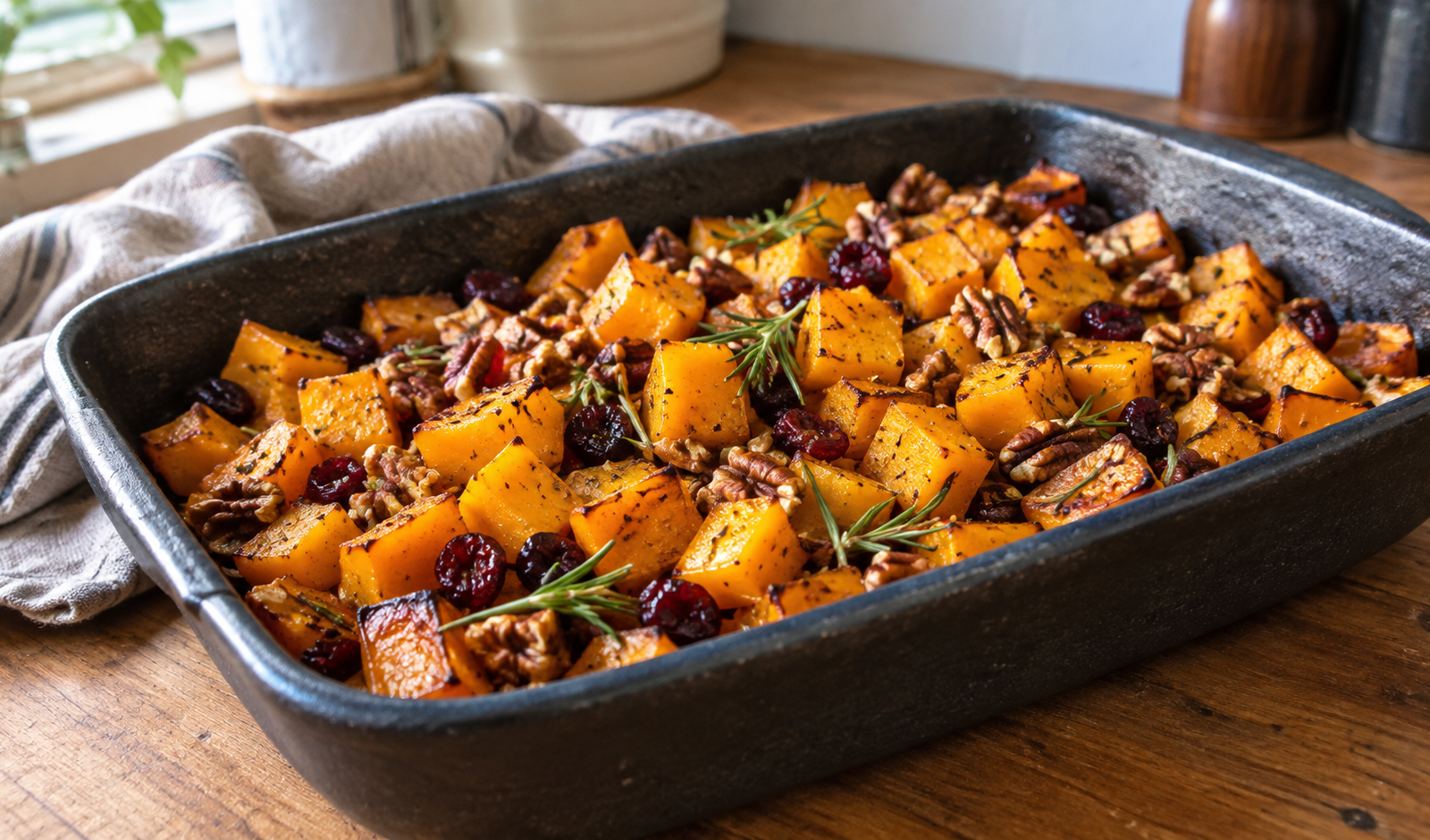
Maple Roasted Butternut Squash with Thyme
This easy maple roasted butternut squash features tender cubes coated in pure maple syrup, olive oil, fresh garlic, and thyme.
6
servings10
minutes40
minutes146
kcalIngredients
2.5 pounds butternut squash, peeled and cut into ½-inch cubes
2 tablespoons olive oil
2 tablespoons maple syrup
2 cloves garlic, minced
1 teaspoon kosher salt
1/4 teaspoon ground pepper
3–4 sprigs of fresh thyme, leaves picked
Directions
- Preheat your oven to 400°F (200°C). Peel the butternut squash, remove the seeds, and cut it into evenly sized half-inch cubes.
- In a small bowl, combine the maple syrup, olive oil, minced garlic, kosher salt, ground pepper, and fresh thyme leaves. Stir until thoroughly mixed.
- Place the cubed butternut squash in a large bowl. Pour the maple mixture over the squash and toss until every piece is evenly coated.
- Transfer the squash to a large baking dish or rimmed baking sheet. Spread the pieces in a single layer, leaving space between them to encourage browning.
- Bake for 30–40 minutes, turning the pieces halfway through cooking. Continue until the squash is fork-tender and the edges are golden and caramelized.
- If the squash is tender but not sufficiently browned, broil it for 1–2 minutes, watching carefully to prevent burning.
- Remove the squash from the oven and allow it to cool briefly. Add extra thyme, pecans, and dried cranberries if desired. Serve warm.
Notes
- Cut the squash into evenly sized cubes for consistent cooking.
- Spread the pieces in a single layer and avoid overcrowding the baking sheet.
- Use pure maple syrup rather than artificially flavored pancake syrup.
- Turn the squash halfway through roasting to promote even browning.
- Add pecans and dried cranberries after cooking to help prevent burning.
- Refrigerate leftovers in an airtight container for up to four days.
- Reheat in the oven for better texture, or use a microwave for convenience.
Nutrition Facts
- Total number of serves: 1
- Calories: 146kcal
- Fat: 5g
- Carbohydrates: 27g
- Fiber: 4g
- Sugar: 8g
- Protein: 2g