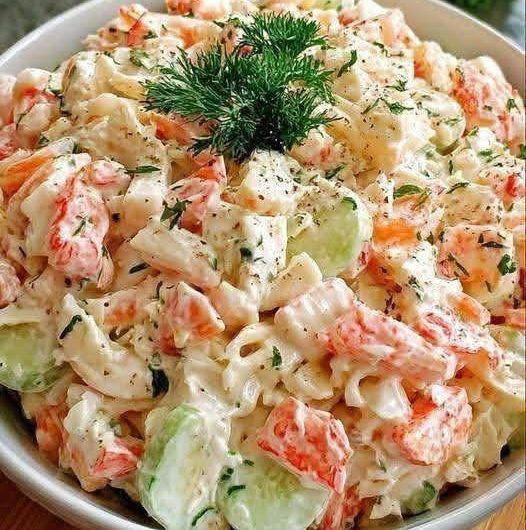
Russian Potato Salad, widely known as Olivier Salad in many parts of the world, is one of the most beloved cold salads ever created. Rich, creamy, colorful, and satisfying, this classic dish has been a centerpiece of family celebrations, holiday tables, festive gatherings, and special occasions for generations. Its popularity extends far beyond its country of origin, and today countless variations are enjoyed throughout Europe, Asia, the Middle East, and many other regions.
At its heart, Russian Potato Salad is a combination of tender potatoes, cooked vegetables, eggs, pickles, and a creamy dressing. While the ingredient list appears simple, the true beauty of the dish lies in the balance of flavors and textures. Soft potatoes provide a comforting foundation, carrots contribute sweetness, peas add freshness, eggs bring richness, and pickles supply a pleasant tanginess that prevents the salad from becoming overly heavy.
One of the reasons this salad has remained popular for so many years is its versatility. It can be served as a side dish, a light lunch, a dinner accompaniment, or even as the centerpiece of a buffet table. It is equally suitable for casual family meals and elegant holiday celebrations.
History of Russian Potato Salad
The original Olivier Salad was created during the nineteenth century by the Belgian-born chef Lucien Olivier, who worked in Moscow. His famous recipe quickly became one of the most sought-after dishes in the city.
The original version was considerably more luxurious than the modern salad and included ingredients such as game birds, crayfish, capers, and a special dressing. Over time, the recipe evolved as home cooks adapted it using ingredients that were more affordable and widely available.
Eventually, potatoes, carrots, peas, eggs, pickles, and mayonnaise became the foundation of the version known today. Despite these changes, the salad retained its reputation as a festive and celebratory dish.
Today, Russian Potato Salad remains an essential part of many holiday traditions and is often served during New Year’s celebrations, family reunions, weddings, birthdays, and special occasions.
Why This Salad Is So Popular
There are many reasons why Russian Potato Salad continues to be loved around the world.
First, it uses simple ingredients that are widely available and affordable.
Second, it can be prepared in advance, making it convenient for entertaining guests.
Third, the flavors improve as the salad chills, meaning it often tastes even better the next day.
Fourth, it can be customized endlessly according to personal preferences and family traditions.
Finally, the combination of creamy dressing, tender vegetables, and savory ingredients creates a satisfying dish that appeals to people of all ages.
Preparation Time
Preparation Time: 40 minutes
Cooking Time: 30 minutes
Chilling Time: 2 hours
Total Time: Approximately 3 hours and 10 minutes
Servings: 10–12
Ingredients
For the Salad
- 1 kilogram potatoes
- 3 medium carrots
- 1½ cups green peas
- 8 large eggs
- 1½ cups pickles, finely diced
- 1 medium onion, finely chopped
- 1 medium apple, peeled and diced (optional)
- 2 cups cooked chicken, ham, or bologna, diced (optional)
- 1 teaspoon salt
- ½ teaspoon black pepper
For the Dressing
- 2 cups mayonnaise
- 4 tablespoons sour cream
- 1 tablespoon Dijon mustard
- 1 tablespoon lemon juice
- 1 teaspoon sugar
- Salt to taste
- Black pepper to taste
Understanding Each Ingredient
Potatoes
Potatoes form the foundation of the salad. They absorb flavors from the dressing and provide a creamy, satisfying texture.
Waxy potatoes are generally preferred because they maintain their shape after cooking. Starchy potatoes can also be used but require extra care to avoid overcooking.
The potatoes should be cooked until tender but not soft enough to fall apart.
Carrots
Carrots contribute sweetness, color, and texture.
Their bright orange color creates visual contrast against the pale potatoes and creamy dressing.
Properly cooked carrots should remain slightly firm while still being tender enough to blend harmoniously with the other ingredients.
Green Peas
Peas add freshness and a subtle sweetness.
Their bright green color also makes the salad more visually appealing.
Fresh, frozen, or canned peas may be used depending on availability.
Eggs
Eggs contribute richness and help create the characteristic texture associated with Russian Potato Salad.
The yolks blend slightly into the dressing while the whites provide structure and substance.
Pickles
Pickles are one of the most important ingredients because they balance the richness of the mayonnaise.
Without the acidity from pickles, the salad can taste overly heavy.
The slight crunch they provide also improves texture.
Onion
Onions add depth and complexity.
A small amount can dramatically enhance the overall flavor of the salad.
Finely chopping the onion ensures it distributes evenly throughout the dish.
Apple
Many traditional family recipes include apple.
The natural sweetness and slight crispness complement the savory ingredients beautifully.
Apples also add an unexpected layer of flavor that many people find irresistible.
Chicken, Ham, or Bologna
Adding meat transforms the salad into a more filling dish.
Chicken provides a lighter option, while ham or bologna creates a more traditional Eastern European flavor.
These additions are optional but highly popular.
Mayonnaise
Mayonnaise serves as the primary dressing ingredient.
A high-quality mayonnaise significantly improves the final result.
Its creamy texture binds all ingredients together and provides richness.
Sour Cream
Sour cream adds a pleasant tanginess and helps lighten the richness of the mayonnaise.
The result is a more balanced dressing.
Mustard
Mustard introduces subtle complexity and depth.
Only a small amount is required to enhance the overall flavor profile.
Lemon Juice
Lemon juice brightens the salad and prevents it from tasting overly rich.
Its acidity complements the pickles and balances the creamy dressing.
Step 1: Cooking the Potatoes
Wash the potatoes thoroughly under running water.
Place them into a large pot and cover with cold water.
Starting with cold water ensures even cooking.
Bring the water to a gentle boil over medium-high heat.
Reduce the heat slightly and cook until the potatoes can be pierced easily with a knife.
Depending on size, this typically requires 20 to 25 minutes.
Avoid overcooking.
The potatoes should hold their shape after cooling.
Drain the potatoes and allow them to cool completely.
Once cooled, peel them carefully and cut them into small cubes.
The cubes should be approximately one centimeter in size.
Uniform pieces create a more attractive salad and improve consistency.
Step 2: Cooking the Carrots
Peel the carrots and rinse them thoroughly.
Place them into a saucepan with enough water to cover them.
Bring the water to a boil and cook until the carrots become tender.
This generally requires 10 to 15 minutes.
Drain and cool completely.
Once cooled, dice the carrots into cubes similar in size to the potatoes.
Consistent sizing helps every bite contain a balanced mixture of ingredients.
Step 3: Preparing the Peas
Fresh peas should be cooked briefly in boiling water until tender.
Frozen peas should be cooked according to package directions.
Canned peas should be drained thoroughly.
After cooking, cool the peas immediately to preserve their bright color and texture.
Step 4: Preparing the Eggs
Place eggs into a saucepan and cover with cold water.
Bring to a gentle boil.
Cook for approximately 10 to 12 minutes.
Transfer the eggs immediately into cold water.
Allow them to cool completely.
Peel carefully and dice into small pieces.
Reserve one egg if desired for decorating the finished salad.
Step 5: Preparing the Pickles
Dice the pickles into small cubes.
The pieces should be roughly the same size as the potatoes and carrots.
After chopping, place the pickles on paper towels and gently pat dry.
Removing excess moisture prevents the salad from becoming watery.
Step 6: Preparing the Onion
Peel and finely chop the onion.
If a milder flavor is preferred, soak the chopped onion in cold water for ten minutes.
Drain thoroughly before using.
This technique softens the sharpness while retaining flavor.
Step 7: Preparing the Apple
Peel the apple and remove the core.
Cut into small cubes.
Toss with a little lemon juice to prevent discoloration.
The apple should be added shortly before mixing the salad.
Step 8: Preparing the Meat
If using chicken, ham, or bologna, cut it into small cubes.
Uniform pieces improve both appearance and texture.
Cooked chicken breast is particularly popular because it adds protein without overwhelming the other flavors.
Step 9: Making the Dressing
In a large bowl, combine mayonnaise, sour cream, mustard, lemon juice, sugar, salt, and black pepper.
Whisk thoroughly until smooth and creamy.
Taste the dressing and adjust seasoning as necessary.
The dressing should be balanced, creamy, slightly tangy, and flavorful.
Step 10: Combining the Ingredients
In an extra-large mixing bowl, add:
- Potatoes
- Carrots
- Peas
- Eggs
- Pickles
- Onion
- Apple
- Meat (if using)
Gently mix everything together.
Pour the dressing over the ingredients.
Using a large spoon or spatula, fold carefully until every component is evenly coated.
Avoid vigorous stirring.
Overmixing can break the potatoes and create a mushy texture.
Step 11: Final Seasoning
Taste the salad carefully.
Add additional salt if necessary.
Adjust black pepper according to preference.
If the salad feels too rich, add a little lemon juice.
If it seems dry, add a small amount of mayonnaise or sour cream.
Balance is the key to an exceptional Russian Potato Salad.
Step 12: Chilling
Cover the bowl tightly with plastic wrap or a lid.
Place in the refrigerator for at least two hours.
Four hours is even better.
Many experienced cooks believe overnight refrigeration produces the best flavor because all ingredients have time to absorb the dressing.
Presentation and Serving
Transfer the chilled salad to a serving dish.
Smooth the surface with a spoon.
Decorate with sliced eggs, chopped parsley, fresh dill, peas, or carrot slices.
Serve cold.
The salad pairs wonderfully with roasted meats, grilled chicken, baked fish, sandwiches, breads, and festive holiday meals.
Traditional Variations
Families often adapt the recipe according to local customs and personal preferences.
Some versions include:
- Cooked chicken
- Ham
- Bologna
- Turkey
- Fresh dill
- Parsley
- Cucumbers
- Corn
- Bell peppers
- Capers
- Green beans
Some households use only mayonnaise, while others prefer a combination of mayonnaise and sour cream.
Every variation contributes a unique character while preserving the essence of the dish.
Storage Instructions
Store the salad in an airtight container in the refrigerator.
Properly stored Russian Potato Salad remains fresh for up to three days.
Keep refrigerated at all times.
Do not leave it at room temperature for extended periods.
Before serving leftovers, stir gently and adjust seasoning if necessary.
Expert Tips for Perfect Results
Always cool the ingredients completely before mixing.
Use high-quality mayonnaise for superior flavor.
Cut all ingredients into similar-sized cubes.
Do not overcook the potatoes.
Pat pickles dry before adding them.
Allow sufficient chilling time.
Taste and adjust seasoning after refrigeration.
Mix gently to preserve texture.
Prepare the salad one day in advance when possible.
Serve thoroughly chilled for the best flavor and consistency.