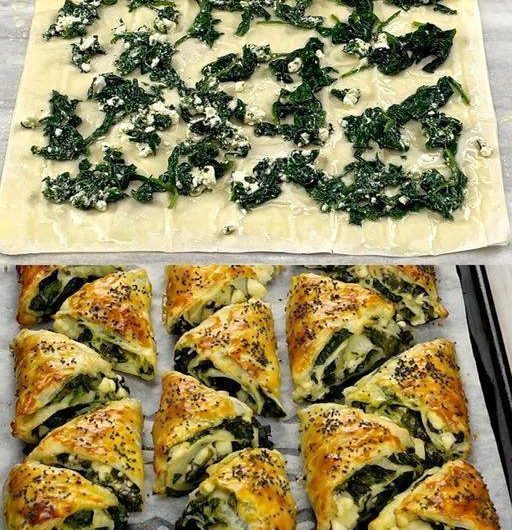
Spinach and feta pastry triangles are a classic savory baked snack known for their crisp, flaky exterior and rich, tangy filling. The combination of soft cooked spinach, salty feta cheese, and aromatic onions wrapped in buttery puff pastry makes them one of the most popular appetizers in Mediterranean-style cooking. They are often served at parties, gatherings, tea-time, or even as a light meal because they are easy to handle, easy to store, and delicious whether served warm or at room temperature.
The success of this recipe depends on technique as much as ingredients. Puff pastry requires cold handling to achieve its signature rise and flakiness, while the spinach filling must be very dry to avoid making the pastry soggy. Many beginners struggle with watery filling or leaking triangles, but with careful preparation, these issues are easy to avoid.
To begin, the filling must be prepared first so it can cool completely before assembly. Start by heating a couple of tablespoons of olive oil in a pan over medium heat. Add finely chopped onion and allow it to cook slowly. The goal is not to rush this step; onions need time to soften and release their sweetness. Stir occasionally until they become translucent and slightly golden, which usually takes around six to eight minutes. Once the onions are ready, add finely minced garlic and cook it briefly, just until its aroma is released. Garlic burns quickly, so it should only stay in the pan for a short moment.
Next comes the spinach, which is the most important ingredient in terms of moisture control. If using fresh spinach, it should be washed thoroughly to remove any grit, then wilted in the pan until it collapses completely. It will release a large amount of water during cooking, and this moisture must be reduced as much as possible. After cooking, transfer it to a sieve and press firmly to remove excess liquid. If using frozen spinach, it must be thawed fully and squeezed very tightly in a cloth or strainer until almost dry. Any remaining water will negatively affect the pastry later.
Once the spinach is dry, add it to the cooked onion and garlic mixture. Stir it well and continue cooking for a few minutes to ensure any remaining moisture evaporates. At this stage, season the mixture with black pepper and a small amount of salt, keeping in mind that feta cheese is naturally salty. You can also add dried oregano or dill for additional flavor, depending on preference. After seasoning, remove the pan from heat and allow the mixture to cool completely. This cooling step is essential because adding cheese to a hot mixture can cause it to melt and become too soft.
When the spinach mixture has cooled, crumble in the feta cheese and mix gently. The texture should remain slightly chunky rather than fully smooth, as small pieces of feta create better flavor pockets inside the pastry. At this point, you may also add an egg if you want a firmer filling that holds together better during baking. Mix everything until evenly combined. The final filling should be thick, dry, and easy to scoop without dripping or spreading.
Now prepare the puff pastry. It should be thawed but still cold to the touch, as cold dough is what creates the best rise in the oven. Lightly flour your work surface and gently roll out the pastry if needed to even out its thickness. Then cut it into equal squares or rectangles, depending on your preferred size. A common size is around eight to ten centimeters per square, which creates neat, snack-sized triangles.
Place a small spoonful of filling in the center of each square. Be careful not to overfill, as too much filling can cause the pastry to burst open during baking. Once filled, fold each square diagonally to form a triangle shape. Press the edges firmly with your fingers to seal them, then use a fork to crimp the edges more securely. This double sealing method ensures that the filling stays inside while baking and also adds a decorative pattern.
Arrange the sealed triangles on a baking tray lined with parchment paper, leaving some space between each piece so they can expand properly in the oven. Brush the tops lightly with beaten egg, which helps create a golden, glossy finish once baked. If desired, sprinkle sesame seeds or nigella seeds on top for extra texture and flavor.
Preheat the oven to two hundred degrees Celsius before baking. Place the tray in the center of the oven and bake for about eighteen to twenty-five minutes. During baking, the puff pastry will rise and separate into crisp, flaky layers while the filling becomes warm and creamy inside. The pastries are ready when they are evenly golden brown and slightly puffed.
Once baked, remove them from the oven and allow them to rest for a few minutes before serving. This short resting time helps the filling settle and prevents burning from the hot interior. They can be served warm for the best flavor and texture, but they also taste excellent at room temperature, which makes them ideal for travel, picnics, or packed lunches.
If you plan to store them, they can be kept in the refrigerator for a couple of days in an airtight container. They can also be frozen before baking, which is a convenient option for preparing in advance. When reheating, an oven or air fryer is preferred to maintain crispness, as microwaving tends to soften the pastry.
The most important factors for success in this recipe are removing moisture from the spinach, keeping the pastry cold, and sealing the edges properly. When these steps are followed carefully, the result is beautifully golden, crisp pastry triangles with a flavorful, well-balanced filling that tastes rich but not hea