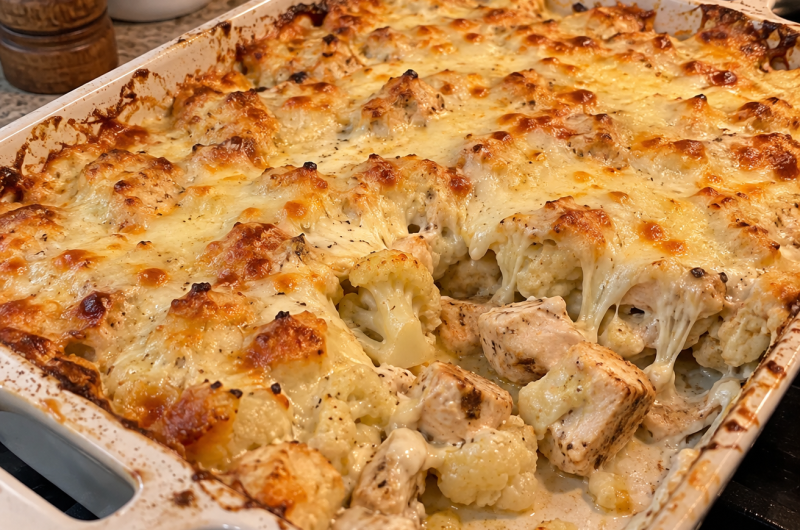
Keto Chicken Alfredo Casserole is a rich, creamy, and satisfying dinner that brings together tender chicken breast, cauliflower, mozzarella cheese, and low-carb Alfredo sauce in one comforting baked dish. Instead of traditional pasta, this recipe uses cauliflower florets to create a filling casserole while keeping the carbohydrate content relatively low. The result is a warm, cheesy meal with plenty of protein and the familiar creamy flavor associated with classic chicken Alfredo.
This easy keto chicken casserole is especially useful when you want a complete family dinner without preparing several separate dishes. The chicken provides a hearty base, cauliflower adds texture and volume, and mozzarella creates a creamy interior with a bubbly cheese topping. Everything is layered in a casserole dish and baked until hot, melted, and lightly golden. With straightforward preparation and familiar ingredients, it works well for both weeknight dinners and make-ahead meals.
Why This Keto Chicken Alfredo Casserole Works
One of the main advantages of this low-carb chicken Alfredo casserole is its simple combination of ingredients. Traditional chicken Alfredo is often served with pasta, which contributes a significant amount of carbohydrates. In this version, cauliflower takes the place of pasta. Its mild flavor pairs naturally with creamy Alfredo sauce while providing enough structure to make the finished casserole substantial and satisfying.
Chicken breast is another important part of the recipe. It provides 32 ounces of lean protein, helping turn the casserole into a filling main course rather than simply a vegetable-and-cheese side dish. Cutting the chicken into small cubes allows it to cook evenly and makes it easy to distribute throughout the casserole. Every serving therefore contains a balanced combination of chicken, cauliflower, sauce, and melted mozzarella.
A Creamy Low-Carb Comfort Food
Comfort food is often associated with pasta, potatoes, bread, or other carbohydrate-heavy ingredients. This keto casserole takes a different approach by concentrating on creamy sauce, chicken, cauliflower, and cheese. The cauliflower absorbs some of the Alfredo sauce during baking, while mozzarella melts between the layers and across the surface. This produces a creamy consistency without needing pasta as the foundation of the meal.
The final baking stage is particularly important. Although the cauliflower and chicken are already cooked before assembly, baking allows the ingredients to come together. The Alfredo sauce heats throughout the casserole, mozzarella melts into the layers, and the cheese on top becomes bubbly. Allowing enough baking time also creates a more cohesive casserole that is easier to portion and serve.
Why Cauliflower Is a Good Pasta Alternative
Cauliflower is commonly used in low-carb recipes because its mild flavor works with many different sauces and seasonings. In this Keto Chicken Alfredo Casserole, bite-sized cauliflower florets provide the bulk and texture that pasta would normally contribute. Because cauliflower has its own moisture, however, preparing it correctly is essential if you want a thick and creamy casserole rather than a watery one.
The florets are steamed briefly until fork-tender. They should become tender enough to eat comfortably but should not turn very soft. Once steamed, draining and drying the cauliflower thoroughly is an important step. Removing excess moisture allows the Alfredo sauce to coat the vegetables more effectively and helps maintain the creamy texture of the finished casserole.
Preparing the Chicken for the Best Texture
Chicken breast works particularly well in this casserole because it has a mild flavor that pairs easily with Alfredo sauce and mozzarella. Cutting the chicken into approximately 1-inch cubes helps it cook quickly and evenly. Before cooking, the pieces are seasoned with onion powder, garlic powder, salt, and pepper, creating a flavorful base without overwhelming the creamy sauce.
The seasoned chicken is cooked in olive oil over medium-high heat for approximately ten minutes, or until completely cooked through. A little browning on the outside adds additional flavor and improves the overall texture. Since the chicken will later spend another thirty minutes in the oven, avoid cooking it excessively in the skillet. It should be safely cooked through but still remain tender.
The Importance of Keto Alfredo Sauce
Alfredo sauce is the ingredient that connects the chicken, cauliflower, and cheese in this casserole. The recipe specifically calls for two cups of Keto Alfredo Sauce. If using a prepared product, check the nutrition label because carbohydrate and sugar levels can vary considerably between different brands. Choosing a sauce that fits your dietary requirements is particularly important when preparing the dish as a ketogenic meal.
Before assembling the casserole, the Alfredo sauce is gently warmed over medium-low heat. Three ounces of shredded mozzarella are then stirred directly into the warm sauce. Melting part of the mozzarella into the sauce creates a thicker and creamier consistency. This helps the sauce cling to the chicken and cauliflower instead of simply settling at the bottom of the baking dish.
Why Mozzarella Works So Well
Mozzarella is used generously throughout this recipe, with twelve ounces divided between the sauce and casserole layers. Its mild flavor complements the Alfredo sauce without making the finished dish excessively sharp. More importantly, mozzarella melts smoothly, helping create the stretchy, creamy texture expected from a cheesy chicken casserole.
Some of the mozzarella melts directly into the warmed Alfredo sauce, while the remainder is distributed throughout the casserole. Layering the cheese rather than placing all of it on top means the casserole has melted cheese in nearly every serving. The final layer also creates the appealing bubbly surface that develops as the casserole bakes.
Building the Casserole in Layers
Layering is more than a presentation technique in this recipe. It ensures that cauliflower, chicken, Alfredo sauce, and mozzarella are distributed throughout the baking dish. The process begins with half a cup of Alfredo sauce spread over the bottom of a prepared 13×9-inch casserole dish. This creates a creamy foundation and helps prevent the ingredients from sticking.
Half of the cauliflower is placed over the sauce, followed by half of the cooked chicken. Another portion of Alfredo sauce is poured over these ingredients, followed by mozzarella. The process is then repeated with the remaining cauliflower, chicken, sauce, and cheese. This arrangement creates consistent flavor and texture from the top of the casserole to the bottom.
How to Prevent a Watery Chicken Alfredo Casserole
One of the most common problems when using cauliflower in casseroles is excess moisture. Cauliflower naturally contains plenty of water, and steaming releases additional moisture. If wet cauliflower is immediately added to the casserole, that liquid can mix with the Alfredo sauce during baking and make the finished dish thinner than intended.
After steaming, drain the cauliflower carefully and pat the florets dry with paper towels before assembling the casserole. Also avoid steaming them longer than necessary. They need only to become fork-tender because they will continue heating in the oven. Properly prepared cauliflower keeps its texture better and allows the creamy Alfredo sauce and melted mozzarella to remain the dominant elements.
Baking the Casserole
The oven should be preheated to 350°F (175°C) before the assembled casserole goes in. Because the chicken and cauliflower have already been cooked, the purpose of baking is primarily to heat the casserole evenly, melt the mozzarella, and bring all of the flavors together. Approximately thirty minutes of baking is enough for the sauce to become hot and the cheese to melt completely.
Look for bubbling sauce around the edges and fully melted mozzarella across the top. Depending on your oven and baking dish, the cheese may also develop a lightly golden appearance. Once removed from the oven, allowing the casserole to rest briefly before cutting can make serving easier because the hot sauce and cheese have a little time to settle.
A High-Protein Keto Dinner
This recipe combines low-carb ingredients with a substantial amount of chicken breast. According to the nutritional information supplied with the original recipe, one serving contains approximately 32 grams of protein. This makes the casserole a particularly protein-rich main dish while still maintaining the low-carbohydrate approach of the original recipe.
The same supplied nutrition information lists approximately 8 grams of total carbohydrates and 3 grams of fiber per serving. Actual nutritional values can vary, especially because different keto Alfredo sauces and mozzarella products may have different nutritional profiles. Anyone closely tracking carbohydrates should calculate the recipe using the exact brands and products used in their own kitchen.
Meal Prep and Make-Ahead Convenience
Keto Chicken Alfredo Casserole is also practical for meal preparation because several components can be prepared before the final baking stage. The cauliflower can be steamed and drained, while the chicken can be seasoned and cooked ahead of time. Keeping these prepared ingredients refrigerated can reduce the amount of work required when you are ready to assemble dinner.
Leftovers can also be reheated for another meal. When reheating, heat only until the chicken is thoroughly hot and the sauce is creamy again. Overheating can cause chicken breast to become dry. If reheating in an oven, covering the casserole for part of the heating time can help retain moisture, while individual portions can be conveniently reheated in a microwave.
Serving Keto Chicken Alfredo Casserole
Because the casserole already contains chicken, cauliflower, cheese, and sauce, it can easily stand alone as a complete main course. Its rich Alfredo flavor also pairs well with a simple green vegetable or fresh salad if you want additional vegetables alongside the meal. Keeping side dishes simple allows the creamy chicken casserole to remain the main focus.
The original recipe produces eight servings, making it suitable for a family meal or for preparing several portions in advance. Cutting the casserole into approximately equal portions also makes it easier to follow the supplied nutritional information, which is calculated using roughly one-eighth of the finished casserole as one serving.
Notes
The most important preparation detail is controlling moisture. Steam the cauliflower only until fork-tender, drain it completely, and pat it dry before layering. Excess moisture can thin the Alfredo sauce during baking and change the texture of the casserole.
Make sure the chicken is completely cooked before assembling the casserole. The oven stage heats and combines the ingredients, but it should not be relied upon as the primary cooking method for raw chicken. Cutting the chicken into similar-sized cubes will also encourage even cooking.
When purchasing Alfredo sauce, choose a keto or low-carbohydrate variety appropriate for your dietary requirements. Some commercially prepared Alfredo sauces may contain added sugars or other carbohydrate-containing ingredients, so checking the nutrition label is worthwhile.
The chicken and cauliflower can be prepared ahead of time and refrigerated before assembling the casserole. This can make the recipe easier to manage on busy evenings. Fresh parsley or basil can also be added before serving if desired, although these are optional additions rather than part of the original ingredient list.
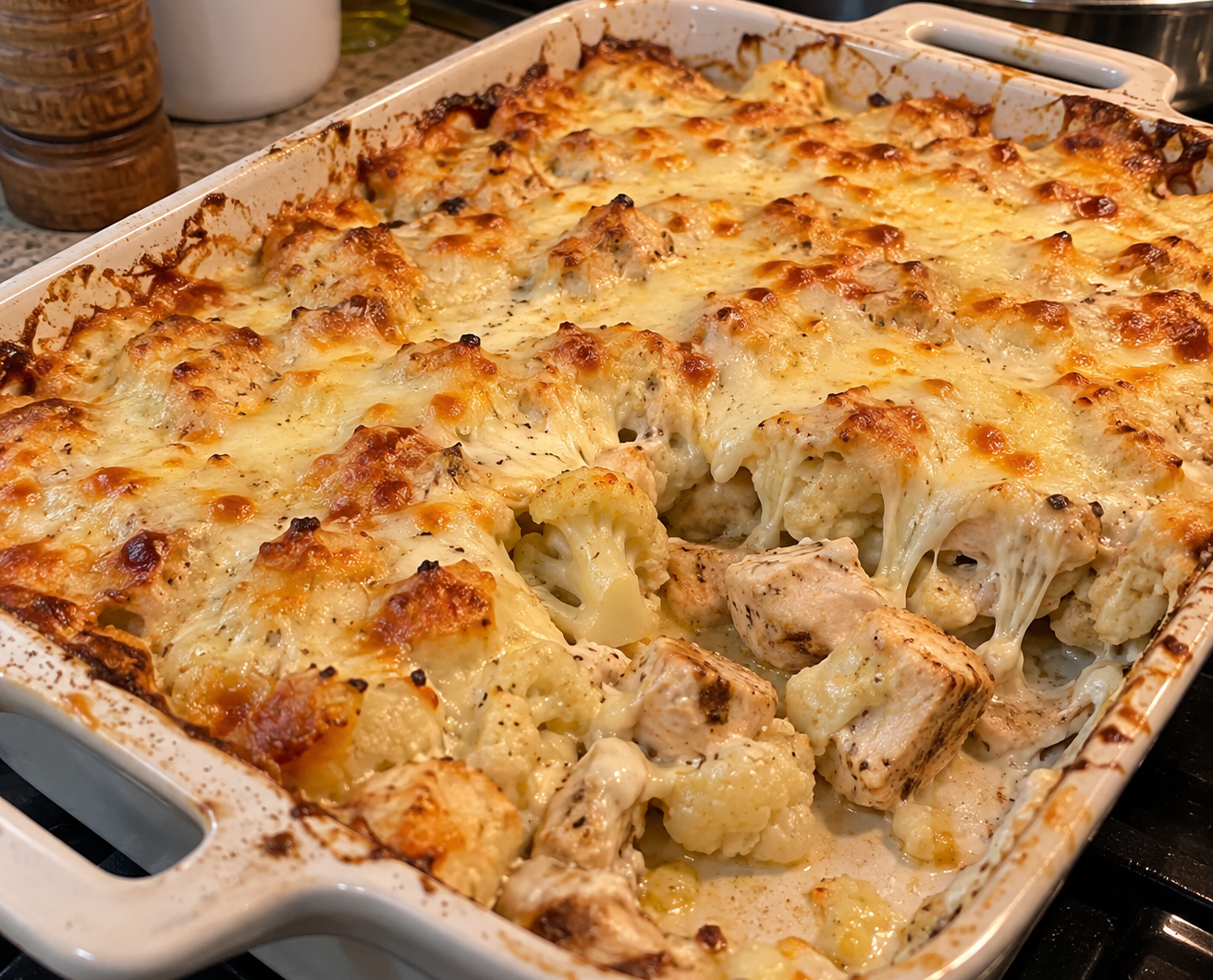
Keto Creamy Chicken Alfredo Bake
A creamy low-carb chicken casserole made with tender chicken breast, cauliflower florets, keto Alfredo sauce, and plenty of melted mozzarella.
8
servings15
minutes40
minutes350
kcal55
minutesIngredients
14 ounces cauliflower florets, cut into bite-size pieces
32 ounces chicken breast
1 teaspoon onion powder
1 teaspoon garlic powder
1/2 teaspoon salt
1/4 teaspoon pepper
1 tablespoon olive oil
2 cups Keto Alfredo Sauce
12 ounces shredded mozzarella cheese, divided
Directions
- Place cauliflower florets in a microwave-safe bowl with 1 cup water. Cover with a damp paper towel and microwave for 3–5 minutes until fork-tender. Drain thoroughly and pat dry.
- Cut chicken breast into 1-inch cubes. Season evenly with onion powder, garlic powder, salt, and pepper.
- Heat olive oil in a skillet over medium-high heat. Cook chicken for approximately 10 minutes, or until completely cooked through. Set aside.
- Preheat the oven to 350°F (175°C).
- Warm the Keto Alfredo Sauce in a small pot over medium-low heat. Stir in 3 ounces mozzarella and continue stirring until melted and smooth.
- Lightly coat a 13×9-inch casserole dish with non-stick spray. Spread 1/2 cup of the warmed Alfredo sauce across the bottom.
- Add half the cauliflower, followed by half the cooked chicken. Pour 3/4 cup Alfredo sauce over the layer and sprinkle with 4.5 ounces mozzarella.
- Repeat with the remaining cauliflower and chicken. Add the remaining Alfredo sauce and finish with the remaining mozzarella.
- Bake for approximately 30 minutes, until thoroughly heated and the cheese is melted and bubbly.
- Remove from the oven, allow to rest briefly, then divide into 8 servings.
Nutrition Facts
8 servings per container
- Amount Per ServingCalories350
- % Daily Value *
- Total Fat
22g
29%
- Total Carbohydrate
8g
3%
- Protein 32g 64%
* The % Daily Value tells you how much a nutrient in a serving of food contributes to a daily diet. 2,000 calories a day is used for general nutrition advice.