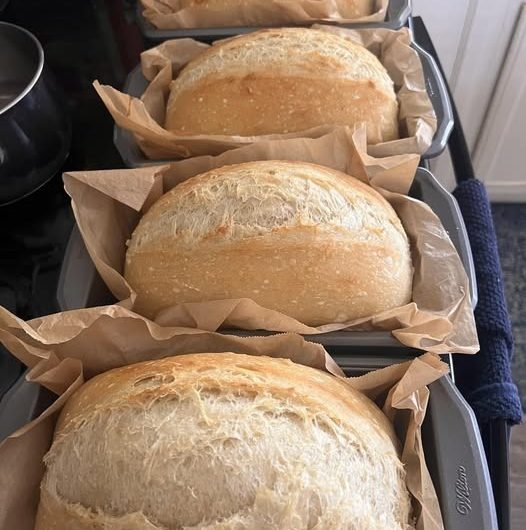
This gluten-free bread recipe is designed to create a loaf that is soft on the inside, slightly crisp on the outside, and sturdy enough for sandwiches, toast, or everyday eating. Unlike many gluten-free breads that turn dry or crumbly, this version stays moist and flexible while maintaining a pleasant chew.
The recipe is intentionally detailed so that every step is clear and easy to follow, even for beginners.
Why This Recipe Works
Traditional wheat bread depends on gluten for elasticity and structure. Since gluten-free bread lacks that protein network, successful gluten-free baking requires a balance of:
- Starches for softness
- Protein for structure
- Binders for elasticity
- Moisture for tenderness
- Proper fermentation for flavor and rise
This recipe combines all of those elements into a dependable loaf that rises well and slices beautifully.
Yield
- 1 standard loaf
- Approximately 12 slices
Preparation Time
- Prep Time: 20 minutes
- Rising Time: 45–60 minutes
- Baking Time: 50–60 minutes
- Cooling Time: 1–2 hours
Equipment Needed
- Large mixing bowl
- Stand mixer or hand mixer
- 9 x 5 inch loaf pan
- Measuring cups and spoons
- Kitchen scale (recommended)
- Silicone spatula
- Clean kitchen towel
- Wire cooling rack
Ingredients
Dry Ingredients
Gluten-Free Flour Blend
Use a high-quality gluten-free all-purpose flour blend that already contains rice flour and starches.
- 3 cups (420 g) gluten-free all-purpose flour blend
Avoid single-flour recipes for best results.
Additional Structure Ingredients
- 1/2 cup (60 g) oat flour
Certified gluten-free if needed - 1/4 cup (30 g) tapioca starch
- 2 tablespoons potato starch
- 2 teaspoons xanthan gum
Essential for elasticity and structure
Yeast and Flavor
- 2 1/4 teaspoons instant yeast
One standard packet - 1 teaspoon salt
- 2 tablespoons sugar or honey
Wet Ingredients
- 1 3/4 cups warm water
About 105°F to 110°F - 2 large eggs
Room temperature - 1/4 cup olive oil or melted butter
- 1 teaspoon apple cider vinegar
Optional Ingredients for Better Flavor and Texture
These are not mandatory but improve the final loaf significantly.
- 1 tablespoon psyllium husk powder
Improves flexibility and softness - 1 tablespoon ground flaxseed
Adds moisture and nutrition - 1 tablespoon milk powder
Enhances softness and browning
Choosing the Right Flour Blend
Not all gluten-free flour blends behave the same way.
For best results, choose one that contains:
- Rice flour
- Potato starch
- Tapioca starch
Avoid blends made mostly from bean flour because they can create dense bread and strong aftertastes.
If your blend already contains xanthan gum, reduce the additional xanthan gum slightly.
Step-by-Step Instructions
Step 1: Prepare the Yeast
In a medium bowl combine:
- Warm water
- Sugar or honey
- Yeast
Stir gently and let it sit for 5–10 minutes.
The mixture should become foamy on top. This means the yeast is active.
If nothing happens after 10 minutes, the yeast may be expired or the water temperature may have been incorrect.
Step 2: Combine Dry Ingredients
In a large mixing bowl whisk together:
- Gluten-free flour blend
- Oat flour
- Tapioca starch
- Potato starch
- Xanthan gum
- Salt
- Psyllium husk powder if using
- Flaxseed if using
Whisk thoroughly to evenly distribute the ingredients.
Proper mixing is extremely important in gluten-free baking because there is no gluten network to naturally combine everything later.
Step 3: Add Wet Ingredients
Add the following to the dry ingredients:
- Yeast mixture
- Eggs
- Oil
- Apple cider vinegar
Mix using a stand mixer on medium speed for about 5 minutes.
The dough will look more like thick cake batter than traditional bread dough. This is completely normal for gluten-free bread.
Do not add too much extra flour.
Step 4: Prepare the Loaf Pan
Grease a 9 x 5 inch loaf pan thoroughly.
You may also line it with parchment paper for easier removal.
Transfer the dough into the pan and smooth the top with a wet spatula.
Step 5: Let the Dough Rise
Cover the pan loosely with a towel or plastic wrap.
Place it in a warm draft-free area for 45–60 minutes.
The dough should rise noticeably and increase in size by roughly 50–75%.
Do not expect gluten-free dough to double dramatically like wheat dough.
Step 6: Bake the Bread
Preheat the oven to 375°F (190°C).
Bake the loaf for 50–60 minutes.
The bread is done when:
- The top is golden brown
- The loaf sounds hollow when tapped
- Internal temperature reaches about 205°F to 210°F
If the top browns too quickly, loosely cover it with foil during the final 15 minutes.
Step 7: Cool Completely
This is one of the most important steps.
Remove the bread from the pan immediately after baking and place it on a wire rack.
Allow it to cool completely before slicing.
Cooling may take 1–2 hours.
Cutting too early can make the inside gummy.
Texture Expectations
A good gluten-free loaf should be:
- Soft but not wet
- Flexible but not rubbery
- Moist but not dense
- Sliceable without crumbling
This recipe aims for balanced texture rather than overly airy bread that collapses later.
Storage Instructions
Room Temperature
Store in an airtight container for up to 2 days.
Refrigerator
Store for up to 5 days.
Warm slices slightly before eating for best texture.
Freezer
Slice the bread first, then freeze in layers separated by parchment paper.
Freeze for up to 3 months.
Toast directly from frozen when needed.
Common Mistakes and How to Avoid Them
Using Too Much Flour
Gluten-free dough should be wetter than traditional bread dough.
Dry dough creates dense bread.
Skipping Xanthan Gum or Psyllium
These ingredients replace gluten structure.
Without them, the loaf may crumble badly.
Cutting While Warm
Warm gluten-free bread is fragile and gummy inside.
Always cool fully before slicing.
Overproofing
Too much rising can cause collapse during baking.
Once the dough rises visibly above the pan edge, it is ready to bake.
Variations
Soft Sandwich Bread
Add:
- 2 tablespoons milk powder
- 1 tablespoon honey
This creates a softer texture.
Rustic Artisan Style
Reduce oil slightly and bake with steam in the oven for a thicker crust.
Seeded Bread
Add:
- Sunflower seeds
- Sesame seeds
- Pumpkin seeds
Fold them into the batter before proofing.
Dairy-Free Version
Replace butter or milk powder with:
- Olive oil
- Coconut milk powder
- Plant-based milk
Egg-Free Version
Replace each egg with:
- 1 tablespoon ground flaxseed
- 3 tablespoons warm water
Let the mixture sit for 10 minutes before adding.
The loaf may be slightly denser but still good.
Best Ways to Use Gluten-Free Bread
This bread works well for:
- Sandwiches
- Toast
- French toast
- Garlic bread
- Bread pudding
- Grilled cheese
- Breakfast toast with eggs
- Avocado toast
Tips for Bakery-Quality Results
Weigh Ingredients
A kitchen scale dramatically improves consistency.
Use Fresh Yeast
Old yeast causes poor rise and dense bread.
Let the Bread Rest Overnight
Many gluten-free breads improve in texture after several hours.
Toast Before Serving
Gluten-free bread often tastes even better lightly toasted.
Flavor Enhancements
To create deeper flavor, consider adding:
- Olive oil
- Honey
- Herbs
- Garlic powder
- Rosemary
- Onion powder
- Parmesan cheese