There are days when a plate of eggs sounds perfect, and then there are days when you want something a little different. This zero carb carnivore bread is a simple way to change things up without reaching for flour, grains, or sugar.
I make this loaf with a small number of ingredients: eggs, finely crushed pork rinds, cream cheese, butter, salt, and a little baking powder if desired. Everything comes together in one bowl, and there is no complicated bread-making process involved. There is no kneading, yeast, rising time, or waiting around for dough to behave.
The mixture goes into a loaf pan and bakes until the outside is lightly golden and the center is set. Once cooled, it can be sliced and served with breakfast, used for a simple sandwich-style meal, or lightly toasted.
It is important to know from the beginning that this is not going to taste or feel exactly like traditional wheat bread. There is no flour in the recipe, so the texture is naturally different. Instead, you get a tender, slightly eggy loaf with a savory flavor and enough structure to slice.
For me, the best thing about this recipe is how uncomplicated it is. The ingredients are easy to work with, the preparation is straightforward, and the loaf does not require special bread-making skills.
What Makes This Carnivore Bread Different?
- Traditional bread gets most of its structure from flour. This recipe takes another route.
- The eggs form the main base of the loaf, while the finely crushed pork rinds help give the mixture body. Cream cheese contributes softness, and butter adds richness. A little salt balances the flavor.
- The result is a loaf that feels much more substantial than simply cooking eggs in a pan.
- The pork rinds are particularly important. They need to be crushed into very fine crumbs so they can blend evenly throughout the mixture. If they are left in large pieces, the finished bread can have an uneven texture.
- Once the ingredients are mixed, the batter is thick enough to spread into a loaf pan. Baking transforms the mixture into something that can be cooled, sliced, and handled much like a simple loaf.
Ingredients You Need
- The ingredient list is short, which is one of the reasons I like making this bread.
- Eggs
- You will need 6 large eggs.
- Eggs provide the foundation of the recipe. They also help the loaf hold together once it has baked and cooled.
- I like to beat the eggs well before adding the other ingredients. You do not need to whip them into a complicated foam, but mixing them thoroughly helps create an even batter.
- Pork Rinds
- You will need 60 grams of finely crushed pork rinds, which is approximately 2 ounces or about 2 cups loosely packed.
- The pork rinds should be processed until they resemble fine breadcrumbs.
- This is one ingredient where texture matters more than anything else. Coarse pieces can remain noticeable in the finished bread, while fine crumbs disappear into the mixture much more evenly.
- A food processor is the easiest way to do this. If you do not have one, a sealed bag and rolling pin work well too.
- Cream Cheese
- Use 60 grams of cream cheese, or approximately 2 ounces.
- Cream cheese helps make the loaf softer and more tender. It also gives the bread a richer texture than eggs and pork rinds alone would provide.
- If your cream cheese is very firm, allow it to soften before mixing. Softened cream cheese blends into the egg mixture much more easily.
- Butter
- You will need 30 grams of melted butter, which is approximately 2 tablespoons.
- Melt the butter before adding it to the mixture. I prefer to let it cool slightly after melting so it is warm rather than extremely hot.
- The butter adds richness and helps keep the finished loaf from feeling too lean.
- Salt
- Use ¼ teaspoon of salt.
- Pork rinds can already contain salt, so there is no need to add a large amount. A small quantity is enough to bring the flavors together.
- Baking Powder
- The recipe calls for ¼ teaspoon of baking powder, but this is optional.
- It can help give the loaf a little extra lift and a lighter texture. However, if you are following a very strict interpretation of carnivore eating and do not want baking powder included, simply leave it out.
- The recipe can still be made without it.
Preparing the Oven and Loaf Pan
- Before mixing the ingredients, preheat the oven to 350°F (175°C).
- I recommend preparing the loaf pan before making the batter. Once everything is mixed, you want to be able to transfer it directly into the pan rather than leaving the mixture sitting around.
- Line a small loaf pan with parchment paper.
- Let some parchment extend over the sides of the pan. These overhanging edges make it much easier to remove the finished bread later.
- You can also grease the pan if you prefer, but parchment makes cleanup easier and gives you a convenient way to lift the loaf out.
- A small loaf pan works best because it gives the bread enough height for slicing. If you use a much larger pan, the mixture will spread out more and the finished bread will be flatter.
Getting the Pork Rinds Ready
- Start with the pork rinds because they need to be crushed before you make the batter.
- Place them into a food processor and process until they are very fine.
- You are aiming for something that looks similar to breadcrumbs.
- Do not stop when the pork rinds are simply broken into small chunks. Continue processing until most of the larger pieces are gone.
- If you do not have a food processor, place the pork rinds into a sturdy resealable bag. Remove as much air as practical, seal the bag, and crush the pork rinds with a rolling pin.
- Turn the bag around as you work so that all of the pieces are crushed evenly.
- Once they are fine, measure out approximately 60 grams.
- Using a kitchen scale is the most consistent option. Measuring cups can be less precise because crushed pork rinds can settle differently depending on how tightly they are packed.
- Set the crumbs aside.
Mixing the Eggs
- Place the six large eggs into a large bowl.
- Beat them with a whisk or electric mixer until the yolks and whites are completely combined.
- I usually spend about one to two minutes on this step.
- The eggs should look smooth, with no separate streaks of white and yolk. They may also become slightly foamy from mixing.
- There is no need to overcomplicate this part. The goal is simply to create an even egg mixture before the remaining ingredients are added.
- This is also a good time to make sure your cream cheese is soft enough to mix easily.
Adding the Cream Cheese
- Add the softened cream cheese to the beaten eggs.
- Mix until the cream cheese is incorporated as evenly as possible.
- If a few tiny pieces remain, that is not necessarily a problem, but large chunks should be broken up.
- An electric mixer can make this step quick, but a whisk or sturdy spoon can also work.
- The mixture should gradually become thicker and creamier as the cream cheese blends with the eggs.
- Take your time here. It is easier to get a smooth batter if the cream cheese is softened before you start.
Adding the Melted Butter
- Melt the butter separately.
- Once it has melted, let it cool slightly.
- You do not want to pour extremely hot butter directly into the eggs. Slightly cooled melted butter is easier to incorporate.
- Slowly add the butter to the egg and cream cheese mixture while stirring.
- Continue mixing until the butter is evenly distributed.
- The mixture should now have a smooth, rich appearance.
Adding Salt and Optional Baking Powder
- Add ¼ teaspoon salt.
- If you are using baking powder, add ¼ teaspoon at this stage as well.
- Stir thoroughly.
- If you are leaving the baking powder out, simply continue with the recipe as written.
- There is no need to increase the amount of baking powder to make the bread rise more. A small amount is enough for the recipe.
Incorporating the Pork Rind Crumbs
- Now comes the part that changes the mixture from a thin egg batter into a thick bread mixture.
- Add the finely crushed pork rinds gradually.
- I prefer adding them in a few portions rather than all at once. Stir after each addition so the crumbs have time to absorb the moisture from the eggs and cream cheese.
- As you mix, the batter will become thicker.
- Do not expect it to look like traditional bread dough. There is no flour here, so the consistency will be different.
- The finished mixture should be thick and spoonable.
- Check the bowl carefully for dry pockets of pork rind. Everything should be evenly moistened.
- If you see a few dry areas, continue stirring until they are incorporated.
Getting the Batter Into the Pan
- Once the mixture is ready, transfer it to the parchment-lined loaf pan.
- Use a spatula or the back of a spoon to spread it evenly.
- Try to distribute the mixture from one end of the pan to the other.
- Smooth the top gently.
- You do not need to pack the mixture down tightly. Just make sure the surface is reasonably even so the loaf bakes consistently.
- If the center is much higher than the edges, the loaf may bake unevenly, so a quick smoothing of the top is worthwhile.
Baking the Bread
- Place the loaf pan in the preheated 350°F (175°C) oven.
- Bake for approximately 35 minutes.
- The exact time can vary slightly from one oven to another, so use the appearance and texture of the loaf as your guide.
- As it bakes, the surface should become lightly golden.
- The center should look set rather than wet or loose.
- If the middle still appears undercooked at the end of the suggested baking time, give it a little more time in the oven and check again.
- Try not to open the oven repeatedly while the loaf is baking. Every time the oven door opens, heat escapes, which can affect the cooking process.
How to Tell When It Is Done
- The easiest way to judge the bread is by looking at the center.
- The top should be lightly golden, and the loaf should look firm.
- The middle should no longer appear liquid or wet.
- You can also gently press the surface. It should feel set rather than like loose batter.
- Remember that the bread will continue to firm as it cools, so you do not want to bake it excessively just because the center is still somewhat soft immediately after coming out of the oven.
- The goal is a fully cooked loaf with a tender center, not a dry one.
Letting the Loaf Cool
- Once the bread is finished baking, remove the pan from the oven.
- Let the loaf rest in the pan for a few minutes.
- Then use the parchment paper to lift it out.
- Place it somewhere suitable for cooling and allow it to cool further before slicing.
- This step is easy to overlook, but it makes a big difference.
- When the loaf is very hot, the center is still delicate. Cutting it immediately can result in slices that break apart or appear softer than expected.
- As the bread cools, the structure becomes firmer.
- For that reason, I prefer to let the loaf cool completely before cutting it.
Slicing the Bread
- Once the loaf has cooled, use a sharp knife to cut it into slices.
- For this recipe, approximately 8 slices is a practical serving size.
- I prefer slices that are not paper thin. Slightly thicker slices are easier to handle and work better if you plan to toast them.
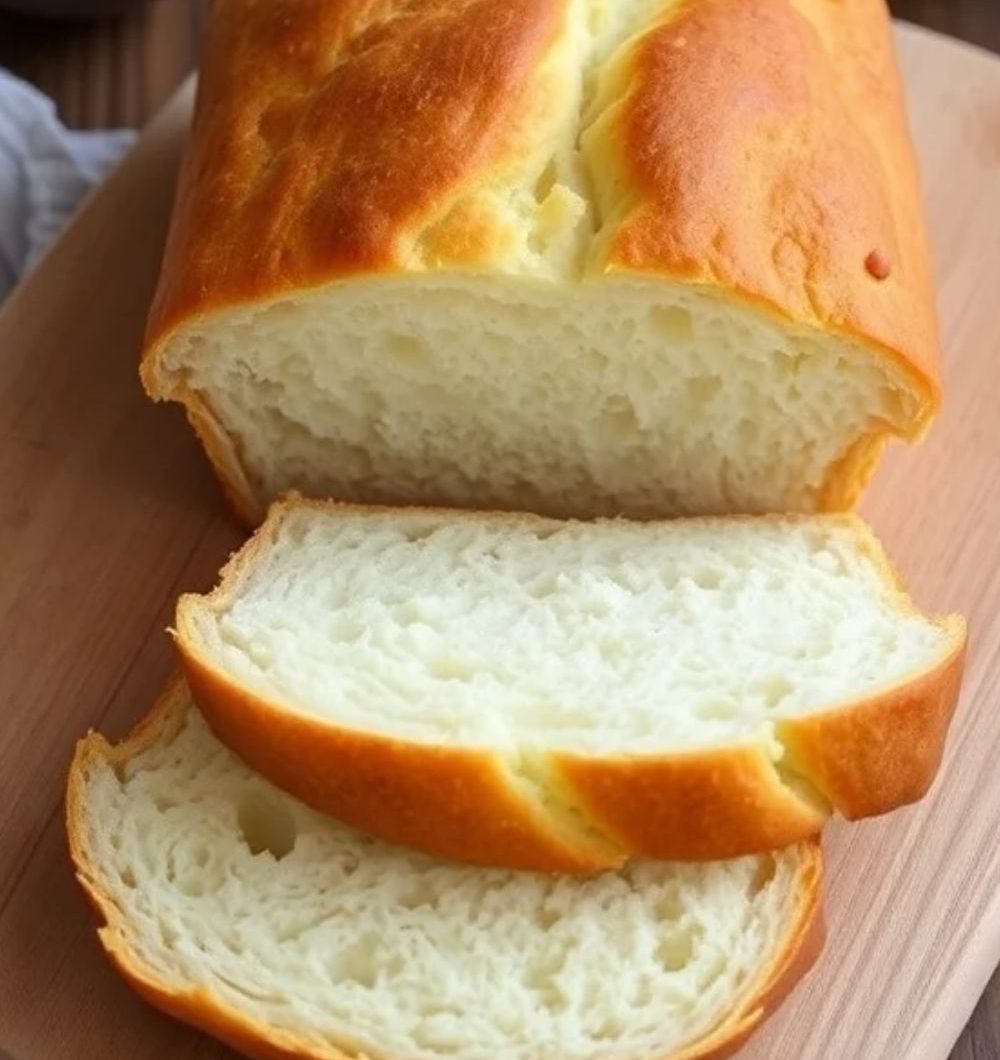
- The inside should be tender and relatively even, while the outside should have a lightly baked golden appearance.
- If your first few slices are not perfectly uniform, do not worry. Homemade bread rarely comes out looking exactly like a packaged loaf, and this recipe is designed to be simple rather than complicated.
Serving Ideas
- There are several easy ways to serve this bread.
- With Breakfast
- A slice can be served alongside eggs or other savory breakfast foods.
- This gives you a different texture from simply eating eggs on their own.
- Toasted
- You can lightly toast the slices if you prefer a firmer exterior.
- Toasting also gives the surface a little more color and makes the bread feel more substantial.
- Keep an eye on it while toasting because thinner slices can brown quickly.
- Sandwich Style
- The slices can also be used for a simple sandwich-style meal.
- Because the bread is relatively mild and savory, it can be paired with other suitable foods without overpowering them.
- Alongside a Meal
- You do not necessarily have to use it as a sandwich. A slice can simply sit alongside a savory meal as a bread alternative.
- That makes the loaf useful beyond breakfast.
Tips for a Better Loaf
- Crush the Pork Rinds Finely
- This is probably the most important preparation tip.
- Fine pork-rind crumbs produce a more consistent loaf.
- Large pieces can remain noticeable and may make the bread harder to slice.
- Soften the Cream Cheese
- Soft cream cheese blends much more easily than cold cream cheese straight from the refrigerator.
- This can save you from having to overmix the batter.
- Do Not Add Very Hot Butter
- Let melted butter cool slightly before adding it to the eggs.
- Warm, liquid butter is easier to incorporate without making the egg mixture difficult to work with.
- Do Not Rush the Cooling
- A loaf that seems too soft immediately after baking may become much firmer once cooled.
- Give it time before deciding that the texture is wrong.
- Use a Small Loaf Pan
- The size of the pan affects the shape and thickness of the finished bread.
- A small loaf pan helps produce slices with enough height to handle comfortably.
Common Problems and What to Check
- The Bread Is Crumbly
- If the loaf breaks apart easily, check the pork-rind texture first.
- Very coarse crumbs may not distribute properly through the mixture.
- Also make sure the loaf has cooled before slicing.
- The Center Is Too Soft
- If the center is still wet after the recommended baking time, it may need additional time in the oven.
- Ovens can vary, so the 35-minute time is a guide rather than an absolute rule.
- The Bread Is Too Dense
- Make sure the eggs were mixed thoroughly and that the pork rinds were crushed finely.
- If you are using baking powder, the small amount included in the recipe may also help with lightness.
- The Bread Seems Dry
- Avoid baking it for significantly longer than necessary.
- The goal is to bake until the center is set, not to continue baking until all moisture has disappeared.
- Cream cheese and butter help provide a softer texture, so measuring those ingredients accurately is useful.
Storage
- Allow the bread to cool completely before storing it.
- Place the cooled loaf or slices into an airtight container and refrigerate.
- Keeping the bread chilled makes it convenient to store and allows you to take out slices as needed.
- If you prefer to freeze it, slicing the loaf first can make things easier. Individual slices can be separated so you do not have to thaw the entire loaf at once.
- When you want to eat a slice, it can be allowed to come closer to room temperature or warmed and toasted.
- Avoid storing the loaf while it is still warm. Trapped steam can create excess moisture inside the container and change the texture.
About the Carb Count
- The recipe is commonly referred to as zero carb or carnivore bread, but the actual carbohydrate content can depend on the products used.
- Eggs, cream cheese, pork rinds, butter, and baking powder may contain small amounts of carbohydrates depending on the specific brand.
- For that reason, anyone tracking carbohydrates very closely should check the nutrition labels on the ingredients and calculate the total based on the products used.
- If following a stricter carnivore approach, the optional baking powder can be omitted.
- The important thing is to use the ingredient choices that fit your own dietary requirements.
Why I Like Keeping This Recipe Simple
- There are plenty of complicated bread alternatives that require a long list of specialty ingredients. This recipe does not.
- The ingredients are familiar, the preparation is straightforward, and the loaf can be made without kneading or yeast.
- Once the pork rinds have been crushed, the rest of the process is mostly mixing and baking.
- That simplicity is what makes this recipe practical for regular home cooking.
- You can prepare the loaf when you want something different from your usual egg-based breakfast, then slice it once cooled and keep it ready for later meals.
Low Carb Keto Carnivore Bread
A simple homemade carnivore-style bread made with eggs, finely crushed pork rinds, cream cheese, butter, and salt. The loaf has a lightly golden outside and soft, tender center and can be sliced for breakfast, toasted, or served with savory meals.
8
servings10
minutes45
minutes145
kcal1
hour10
minutesIngredients
6 large eggs
60 g finely crushed pork rinds, about 2 oz or 2 cups loosely packed
60 g cream cheese, about 2 oz or ¼ cup
30 g melted butter, about 2 tbsp or 1 oz
¼ tsp salt
¼ tsp baking powder, optional
Directions
- Preheat the oven to 350°F (175°C).
- Line a small loaf pan with parchment paper, leaving some parchment hanging over the sides.
- Beat the eggs in a large bowl for 1–2 minutes, until fully combined and slightly foamy.
- Crush the pork rinds in a food processor until they resemble fine breadcrumbs.
- Add the softened cream cheese and mix until evenly incorporated.
- Add the melted, slightly cooled butter, salt, and optional baking powder. Mix well.
- Gradually add the crushed pork rinds, stirring until a thick, evenly mixed batter forms.
- Transfer the mixture to the prepared loaf pan and smooth the top.
- Bake for approximately 35 minutes, or until lightly golden and the center is fully set.
- Remove from the oven and allow the loaf to cool for several minutes in the pan.
- Lift the loaf out using the parchment paper and allow it to cool completely.
- Slice into approximately 8 pieces and serve.
Notes
- Crush the pork rinds very finely for the most even texture.
- Softened cream cheese mixes more easily into the eggs.
- Let melted butter cool slightly before adding it to the egg mixture.
- Baking powder is optional and can be omitted for a stricter carnivore version.
- Do not slice the bread while it is very hot; it becomes easier to handle as it cools.
- Store completely cooled bread in an airtight container in the refrigerator.
- For precise carbohydrate information, check the nutrition labels of the specific ingredients you use.
Nutrition Facts
- Serving Size: 1 g
- Total number of serves: 8
- Calories: 145kcal
- Fat: 11g
- Carbohydrates: 1g
- Fiber: 0g
- Sugar: 0.5g
- Protein: 9g