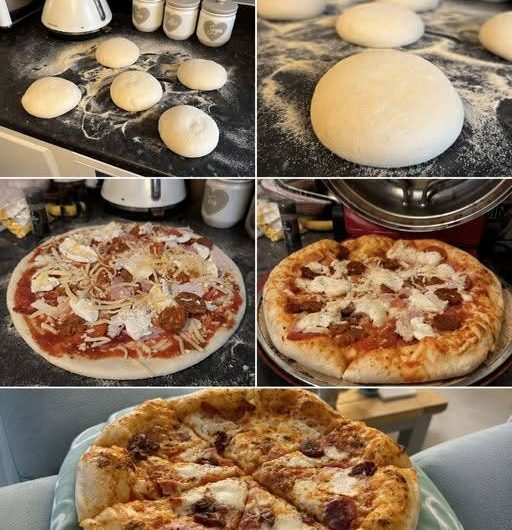
Sourdough pizza is one of the most flavorful and satisfying styles of pizza you can make at home. Unlike regular pizza dough made with commercial yeast alone, sourdough pizza uses a natural fermented starter that develops deep flavor, airy texture, crisp crust, and excellent digestibility.
A well-made sourdough pizza has:
- A crispy golden exterior
- Light and airy edges
- Chewy yet soft interior
- Rich fermented flavor
- Beautiful blistered crust
- Balanced acidity
- Deep aroma from long fermentation
This detailed recipe explains every stage carefully, including:
- Understanding sourdough starter
- Dough fermentation
- Gluten development
- Dough shaping
- Sauce preparation
- Cheese selection
- Baking techniques
- Professional pizza tips
- Common mistakes and solutions
The instructions are intentionally written in a very detailed and readable format so even beginners can confidently prepare bakery-quality sourdough pizza at home.
Introduction to Sourdough Pizza
Traditional sourdough pizza has existed for centuries. Before commercial yeast became common, bakers relied on natural fermentation to make bread and pizza dough rise.
A sourdough starter contains naturally occurring wild yeast and beneficial bacteria. During fermentation, these microorganisms slowly develop flavor and structure inside the dough.
This slow fermentation creates several advantages:
- Better taste
- Improved texture
- More complex aroma
- Crispier crust
- Easier digestion
- Better browning during baking
Sourdough pizza is now highly respected among artisan bakers and professional pizzerias because of its superior flavor and texture.
What Makes Sourdough Pizza Different
Regular pizza dough usually ferments for only a few hours.
Sourdough pizza dough often ferments for:
- 24 hours
- 48 hours
- Sometimes even longer
This extended fermentation allows:
- Gluten development
- Flavor complexity
- Gas formation
- Improved elasticity
- Better crust texture
The result is pizza with a deep flavor that ordinary dough cannot easily achieve.
Preparation Timeline
Day 1
- Feed sourdough starter
- Mix dough
- Rest and fold dough
- Begin fermentation
Day 2
- Cold ferment dough
- Prepare sauce and toppings
Day 3
- Shape dough
- Add toppings
- Bake pizza
Although the process is long, most of the time is passive resting rather than active work.
Total Time
Approximately 24 to 48 hours including fermentation.
Yield
Makes 3 medium pizzas or 2 large pizzas.
Understanding Sourdough Starter
A sourdough starter is a fermented mixture of:
- Flour
- Water
- Wild yeast
- Natural bacteria
The starter acts as the natural leavening system.
A healthy starter should:
- Double in size after feeding
- Smell slightly tangy
- Have bubbles throughout
- Look active and airy
An inactive starter may produce dense pizza dough.
Ingredients for the Dough
- 500 grams bread flour
- 350 grams water
- 100 grams active sourdough starter
- 10 grams salt
- 10 grams olive oil
Why Bread Flour Is Important
Bread flour contains higher protein than regular flour.
Higher protein creates:
- Stronger gluten
- Better chewiness
- Improved structure
- Better air pockets
This helps create the classic airy pizza crust.
Ingredients for Pizza Sauce
- 1 can crushed tomatoes
- 2 tablespoons olive oil
- 3 garlic cloves minced
- 1 teaspoon salt
- 1 teaspoon sugar
- 1 teaspoon oregano
- Fresh basil optional
- Black pepper to taste
Ingredients for Toppings
You may customize freely.
Popular toppings include:
- Fresh mozzarella
- Parmesan cheese
- Mushrooms
- Olives
- Pepperoni
- Chicken
- Bell peppers
- Onions
- Basil leaves
Equipment Needed
- Large mixing bowl
- Kitchen scale
- Dough scraper
- Pizza stone or steel
- Oven
- Baking peel optional
- Cast iron pan optional
Why Kitchen Scales Matter
Professional pizza dough is measured by weight rather than volume.
Using grams provides:
- Better consistency
- Accurate hydration
- Predictable results
This is especially important for sourdough recipes.
Step 1 – Feed the Starter
Several hours before making dough, feed your starter.
Example feeding:
- 50 grams starter
- 50 grams flour
- 50 grams water
Leave at room temperature until doubled.
This usually takes 4 to 6 hours depending on temperature.
A fully active starter should float in water.
Understanding Fermentation Activity
The starter becomes active because yeast consumes sugars and releases gas.
The bacteria produce acids that give sourdough its flavor.
Balanced fermentation is essential.
Too little fermentation produces bland dough.
Too much fermentation weakens gluten structure.
Step 2 – Mix Flour and Water
In a large bowl combine:
- Bread flour
- Water
Mix until no dry flour remains.
The dough will appear rough and shaggy.
Cover and rest for 30 minutes.
This process is called autolyse.
What Is Autolyse
Autolyse allows flour to hydrate fully before adding salt and starter.
Benefits include:
- Better gluten formation
- Easier kneading
- Improved elasticity
- Softer dough texture
This simple resting period greatly improves dough quality.
Step 3 – Add Starter and Salt
Add:
- Active sourdough starter
- Salt
- Olive oil
Mix thoroughly until incorporated.
The dough will become sticky but smoother.
Step 4 – Begin Stretch and Fold Process
Instead of aggressive kneading, sourdough dough often uses stretch-and-fold techniques.
To perform a stretch and fold:
- Wet your hands
- Lift one side of dough
- Stretch upward gently
- Fold over itself
- Rotate bowl
- Repeat several times
Rest dough 30 minutes between folds.
Perform 3 to 4 rounds.
Why Stretch and Fold Works
Stretching and folding strengthens gluten gradually without tearing the dough.
Benefits include:
- Better structure
- Improved elasticity
- More trapped gas
- Airier crust
The dough becomes smoother after each fold.
Step 5 – Bulk Fermentation
Cover the dough.
Leave at room temperature for 4 to 6 hours.
The exact time depends on:
- Room temperature
- Starter strength
- Flour type
During fermentation the dough should:
- Expand noticeably
- Become airy
- Feel lighter
- Show bubbles
Signs Bulk Fermentation Is Complete
The dough is ready when:
- Volume increases around 50 percent
- Surface appears smooth
- Dough jiggles slightly
- Small bubbles appear underneath
Under-fermented dough feels tight and dense.
Over-fermented dough feels weak and sticky.
Step 6 – Cold Fermentation
Transfer dough to refrigerator overnight.
Cold fermentation dramatically improves flavor.
This slow resting period develops:
- Complex taste
- Better browning
- Improved texture
- Easier digestion
Many professional pizzerias ferment dough for 24 to 72 hours.
Step 7 – Divide the Dough
The next day remove dough from refrigerator.
Divide into equal portions.
Shape into tight dough balls.
Place into lightly oiled containers.
Allow to rest at room temperature for 2 to 4 hours before baking.
Why Resting Matters
Cold dough resists stretching.
Resting allows gluten to relax.
Relaxed dough stretches more easily and creates better pizza shape.
Preparing Pizza Sauce
Step 1 – Heat Olive Oil
Warm olive oil in a saucepan.
Add minced garlic.
Cook gently for 1 minute.
Do not brown the garlic heavily.
Step 2 – Add Tomatoes
Add crushed tomatoes.
Stir thoroughly.
Add:
- Salt
- Sugar
- Oregano
- Pepper
Simmer gently for 20 minutes.
The sauce should thicken slightly.
Cool completely before using.
Why Thick Sauce Is Better
Watery sauce can create soggy pizza.
Thicker sauce keeps crust crisp while maintaining flavor.
Cheese Selection
Fresh mozzarella is ideal for sourdough pizza.
Benefits include:
- Creamy texture
- Balanced melting
- Mild flavor
- Authentic pizza appearance
Low-moisture mozzarella creates less water during baking.
Many bakers combine both types.
Preparing the Oven
A very hot oven is critical.
Preheat oven to highest temperature possible.
Usually:
- 250°C to 300°C
- 475°F to 550°F
Place pizza stone or steel inside while preheating.
Allow at least 45 minutes of preheating.
Why High Heat Matters
High heat creates:
- Crispy crust
- Oven spring
- Air bubbles
- Proper browning
- Fast cooking
Low temperatures produce dry and tough pizza.
Shaping the Dough
Step 1 – Flour the Surface
Lightly flour work surface.
Place dough ball gently onto flour.
Step 2 – Press the Dough
Use fingertips to press center outward.
Leave thicker edges untouched.
This creates the crust ring.
Step 3 – Stretch Carefully
Lift dough gently.
Rotate while stretching.
Avoid using rolling pins.
Rolling pins remove gas bubbles that create airy crust.
Proper Dough Texture
Well-fermented dough should feel:
- Soft
- Elastic
- Light
- Airy
The dough should stretch without tearing easily.
Adding Toppings
Apply toppings lightly.
Too many toppings can:
- Prevent crispness
- Create soggy pizza
- Slow cooking
A balanced pizza cooks more evenly.
Suggested Layer Order
- Sauce
- Cheese
- Main toppings
- Herbs
- Olive oil drizzle
Baking the Pizza
Transfer pizza carefully onto hot stone or steel.
Bake for 7 to 12 minutes depending on oven temperature.
The pizza is ready when:
- Crust becomes golden
- Cheese bubbles
- Edges puff dramatically
- Bottom becomes crisp
Final Finishing
After baking you may add:
- Fresh basil
- Olive oil drizzle
- Parmesan
- Chili flakes
Allow pizza to cool for 1 to 2 minutes before slicing.
Texture of Finished Sourdough Pizza
A perfect sourdough pizza should have:
- Crisp underside
- Puffy crust
- Air pockets
- Chewy bite
- Soft center
- Slight smoky aroma
The flavor should feel deep and balanced rather than overly sour.
Common Mistakes and Solutions
Dense Crust
Cause:
Weak starter or under-fermentation.
Solution:
Use active starter and extend fermentation.
Dough Tears Easily
Cause:
Weak gluten development.
Solution:
Perform additional folds.
Pizza Sticks to Surface
Cause:
Insufficient flour.
Solution:
Dust surface lightly before shaping.
Burned Bottom
Cause:
Excessive heat or too much flour underneath.
Solution:
Reduce baking time slightly.
Soggy Pizza
Cause:
Too much sauce or wet toppings.
Solution:
Use less moisture.
Storage Instructions
Refrigerator
Store leftover pizza in airtight container for 3 days.
Reheating
Reheat in skillet or oven for crisp texture.
Microwaving softens crust.
Freezing Dough
Dough balls may be frozen after fermentation.
Wrap tightly and freeze for up to 2 months.
Thaw slowly in refrigerator before use.
Variations of Sourdough Pizza
Margherita Pizza
Tomato sauce, mozzarella, basil.
White Pizza
No tomato sauce.
Use ricotta, garlic, and olive oil.
Meat Lovers Pizza
Pepperoni, sausage, chicken, beef.
Vegetable Pizza
Bell peppers, onions, olives, mushrooms, spinach.
Spicy Pizza
Add chili oil and jalapeños.
Dessert Pizza
Nutella, fruits, powdered sugar.
Why People Love Sourdough Pizza
Sourdough pizza offers a combination of:
- Artisan texture
- Deep flavor
- Rustic appearance
- Crisp crust
- Natural fermentation
Many people also find fermented dough easier to digest than conventional dough.
Professional Pizza Tips
Use Minimal Flour While Shaping
Too much flour burns in the oven.
Avoid Overloading Toppings
Balanced pizzas cook best.
Preheat Thoroughly
Insufficient preheating weakens crust quality.
Use Hands Instead of Rolling Pin
This preserves internal gas bubbles.
Let Dough Relax
Rested dough stretches more easily.
Understanding Pizza Hydration
Hydration refers to water percentage relative to flour.
Higher hydration dough creates:
- Larger air pockets
- Softer interior
- Better oven spring
Lower hydration dough creates:
- Easier handling
- Crispier structure
This recipe uses moderate hydration for balance.
The Science of Crust Formation
During baking:
- Water turns to steam
- Gas expands
- Gluten stretches
- Sugars caramelize
These reactions create:
- Puffy edges
- Golden color
- Crisp texture
- Rich flavor
Serving Suggestions
Sourdough pizza pairs well with:
- Fresh salad
- Garlic dip
- Roasted vegetables
- Sparkling drinks
- Soup
Final Presentation
A finished sourdough pizza should look:
- Rustic
- Puffy
- Golden brown
- Slightly blistered
- Crisp underneath
- Soft inside
The crust should have visible air pockets and a rich aroma from fermentation.